Jul 27, 2026 · 6 min read
DHS Is Tripling Border Towers to 2,300 by 2034
A government audit published in June 2026 lays out the plan: 830 surveillance towers today, about 2,300 by 2034, more than $1 billion of it paid for by the 2025 tax and spending law. The towers do not point only at the desert. One of them was proposed for a beach town in Orange County, and it can see nine miles.
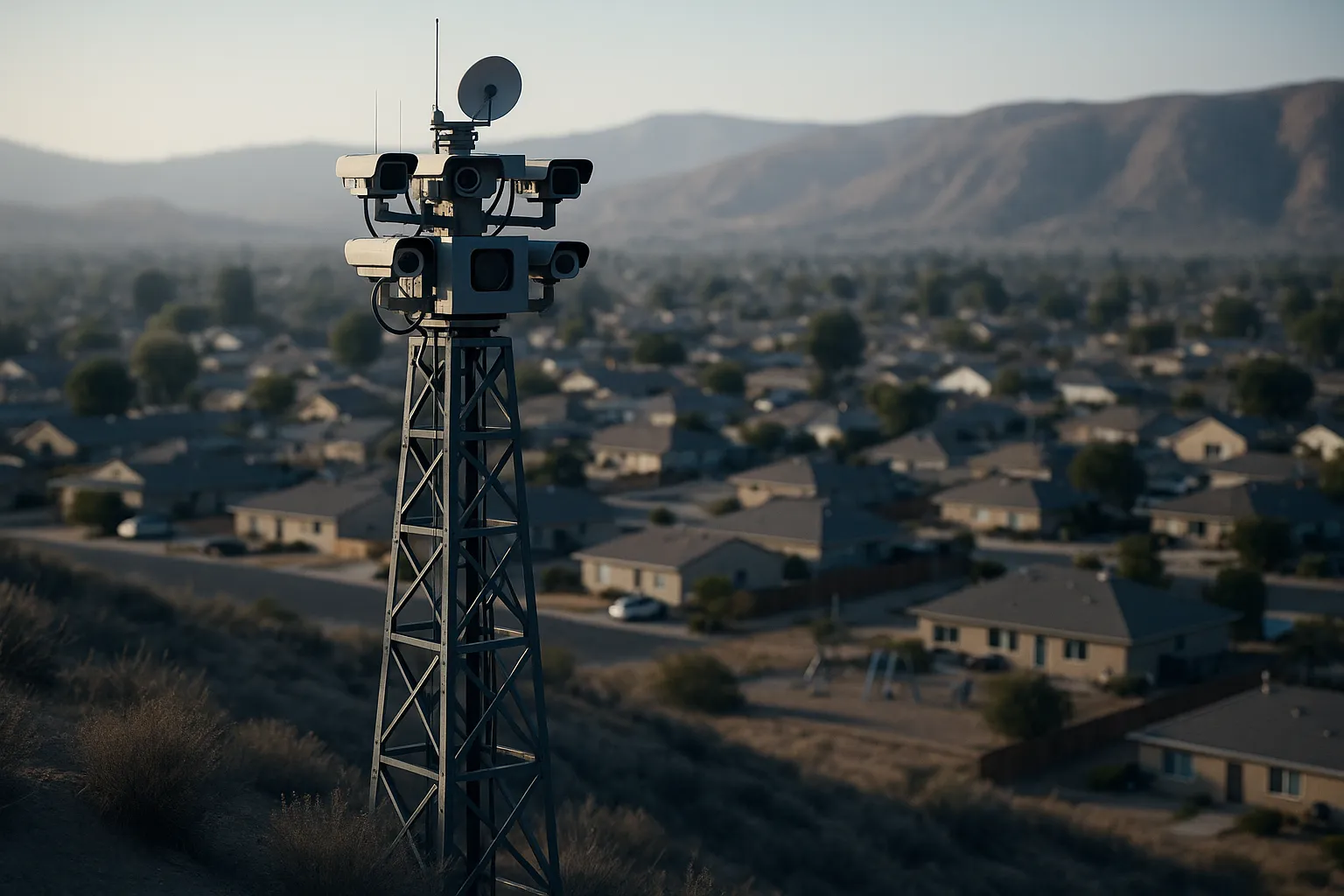
San Clemente, California sits 75 miles from Mexico. Population 62,000, surf shops, a pier. In April 2026 Customs and Border Protection proposed putting an Anduril Sentry tower on a cliff above it. City officials asked for one concession: put in writing that the tower will not surveil residential neighborhoods. CBP said no. The system would stay capable of tracking human beings in residential areas, the agency explained, in case of active smuggling.
That exchange is the whole story in miniature, and it is about to happen roughly 1,470 more times.
Key Takeaways
- DHS plans to grow its border surveillance tower network from roughly 830 towers today to about 2,300 by 2034, according to the Electronic Frontier Foundation's July 20, 2026 analysis of a Government Accountability Office assessment.
- More than $1 billion in taxpayer money for the expansion comes from the One Big Beautiful Act, the tax and spending law signed in 2025.
- Customs and Border Protection awarded Anduril Industries a $363 million contract in December 2025 for over 200 Extended Range Sentry Towers that detect, classify and track targets without a human watching the feed.
- About two thirds of the United States population, roughly 200 million people, already live within 100 miles of a land or coastal border, the zone where these towers are legally sited.
- CBP refused San Clemente, California's request to bar the tower proposed above it from surveilling residential neighborhoods.
How Many Surveillance Towers Does DHS Have?
About 830 today, with a target of roughly 2,300 by 2034. The figures come from the Government Accountability Office's annual assessment of major DHS acquisition programs, GAO-26-108118, published in June 2026 and surfaced by EFF's Karen Gullo the following month.
The pace is the part nobody quotes. Adding 1,470 towers by 2034 means standing up a new one roughly every two days for eight years. Anduril is already building more than 15 a month against its December contract, with over 40 delivered.
The money deserves a second look too. That $363 million award covers just over 200 towers, about $1.8 million each. At that unit price, $1 billion buys around 550 towers, not 1,470. Either later units get much cheaper, or the billion is a down payment.
What Do Autonomous Surveillance Towers Actually See?
They see everything within their radius and let software decide what counts, which makes them a different thing from a camera. CBP's Integrated Surveillance Tower office runs three system types:
- Autonomous surveillance towers. AI driven rigs combining radar, thermal infrared and optical sensors to detect, classify and track targets at distance. Anduril's extended range units reach beyond five miles; the San Clemente model was documented at nine.
- Integrated fixed towers. Older, tuned for foot traffic and vehicles along established corridors.
- Remote video surveillance systems. Short range cameras mounted close to the fence, including Arizona neighborhoods where, as EFF puts it, they are capable of spying on homes on both sides of the border.
"Autonomous" does not mean the tower drives itself. It means no analyst is required in the loop. The system watches continuously, decides on its own what is a person, a vehicle or an animal, and raises an alert. DHS also plans to buy more long range autonomous towers and retrofit existing ones, turning older passive units into classifiers. EFF's summary of the network is blunt: it is indiscriminately trained on towns, school playgrounds, backyards and vehicles.
Who Lives Inside the Border Zone?
Most Americans do. Federal regulation gives CBP expanded authority within 100 miles of any external boundary, and the ACLU's analysis of that rule puts roughly two thirds of the population, about 200 million people, inside it. Nine of the ten largest metro areas qualify. Florida, Massachusetts, New Jersey and Maine sit almost wholly within it, because coastlines count as borders.
Which is why San Clemente matters more than its size suggests. A town 75 miles inland, on the Pacific rather than the Rio Grande, is an ordinary siting decision under the 100 mile rule. The mental image of a lonely tower in the Sonoran Desert does a lot of work in public understanding of this program, and it is wrong. The pattern rhymes with the LAPD walking away from its Flock Safety license plate reader contract: infrastructure justified by one narrow purpose ends up pointed at everyone who drives past.
Why the Refusal in San Clemente Is the Real Story
That refusal is more informative than any tower count, because it shows the operating floor when a community negotiates from strength: an affluent Orange County city, lawyers, and an April 2026 town hall organized by Oakland Privacy. If that yields no neighborhood carve out, Nogales and Marfa should not expect one.
A second wrinkle in the San Clemente documents is worth sitting with: imagery would be retained indefinitely to train the vendor's algorithms. Residents would fund the collection of their own footage as training data for a private company. Oversight is thin. GAO's December 2024 review, GAO-25-107302, found DHS policies for public facing surveillance technologies did not consistently address key privacy protections such as data minimization, retention limits and accountability.
What This Means for Journalists and Aid Workers
If your reporting, legal work or aid work happens near a border, a network that classifies and logs movement produces something care in the moment cannot prevent: a pattern of life record. Not one sighting, but a trace of which vehicle reached which crossing point on which days, and how often. Meet a source twice in the same place and the second meeting is a correlation, not an event.
Tower data does not stay in the tower. It joins DHS streams that already include plate reads, aerostat radar and commercially purchased phone location data, covered in how CBP buys advertising location data from the apps on your phone. Fuse a plate read, a tower track and an advertising identifier and you have a name attached to a route. Add device searches at ports of entry, where the Fourth Circuit ruled in July 2026 that agents can scroll your phone with no suspicion, and the physical and digital layers meet.
The asymmetry to plan around: you can encrypt a message, but you cannot encrypt a truck on a road at 3pm.
What Can You Do About It?
Individual habits will not stop a $1 billion procurement, but several steps are concretely useful and a few of them scale.
- Find out what is already near you. Search your county in EFF's Atlas of Surveillance, which held 598 mapped border towers as of June 5, 2026 alongside aerostats, plate readers and face recognition at ports of entry. Knowing a tower's location and range changes route planning.
- File a public records request. EFF built its map since 2022 largely from public records, satellite imagery and field trips. Siting documents, agreements with local governments and retention schedules are all requestable, and local agencies answer faster than federal ones.
- Show up to the local vote. Towers on municipal land need municipal approval. Community control ordinances, requiring council sign off and an annual public report before deployment, are the mechanism with a real track record.
- Harden devices before crossing. Use a long alphanumeric passcode rather than face or fingerprint unlock, sign out of cloud accounts, power the device fully off before screening and carry a minimal travel device when the trip warrants it.
- Treat travel patterns as sensitive. Vary routes and timing on repeat trips, and assume your vehicle and schedule are logged even when nothing goes wrong.
Watch the retrofit program in particular. Converting existing passive cameras into autonomous classifiers expands AI coverage without a single new tower going up, and without the local hearing that would come with one.
Sources: Electronic Frontier Foundation, "An Explosion of Surveillance Towers is Coming to U.S. Borders" (July 20, 2026), GAO-26-108118, DHS Annual Assessment (June 2026), GAO-25-107302 (December 3, 2024), ACLU, The Constitution in the 100 Mile Border Zone, and EFF's Atlas of Surveillance.