Jul 24, 2026 · 6 min read
Turkey Detained 11 Journalists Ahead of NATO Summit
Turkish police detained or arrested at least 11 journalists in the two weeks before hosting NATO's 36th summit, then picked up a Deutsche Welle reporter a second time within five months.
Turkey did not wait for NATO leaders to land in Ankara. In the two weeks before the alliance's July 7 and 8 summit, police detained or arrested at least 11 journalists across five cities. Then, on July 21, they picked up a Deutsche Welle reporter for the second time in five months, about two months after a court had already let him go.
Key Takeaways
- Turkish authorities detained or arrested at least 11 journalists between June 23 and July 7, 2026, in the two weeks before Ankara hosted NATO's 36th summit, according to the Committee to Protect Journalists.
- Deutsche Welle Turkish service reporter Alican Uludağ was detained again on July 21, 2026, about two months after his release from 90 days of pretrial detention, this time over a social media post about Turkish criminal investigations.
- An Ankara court released Uludağ after roughly 25 hours in custody but barred him from leaving the country and ordered him to report to police four days a week.
- Turkey fell to 163rd out of 180 countries in the 2026 RSF World Press Freedom Index, down from 159th a year earlier, and has imprisoned more than 200 journalists over the past five years.
- CPJ's Turkey representative said the crackdown is unacceptable whether or not the NATO summit is being used as a pretext, and called for reform of the disinformation law used against several of the detained journalists.
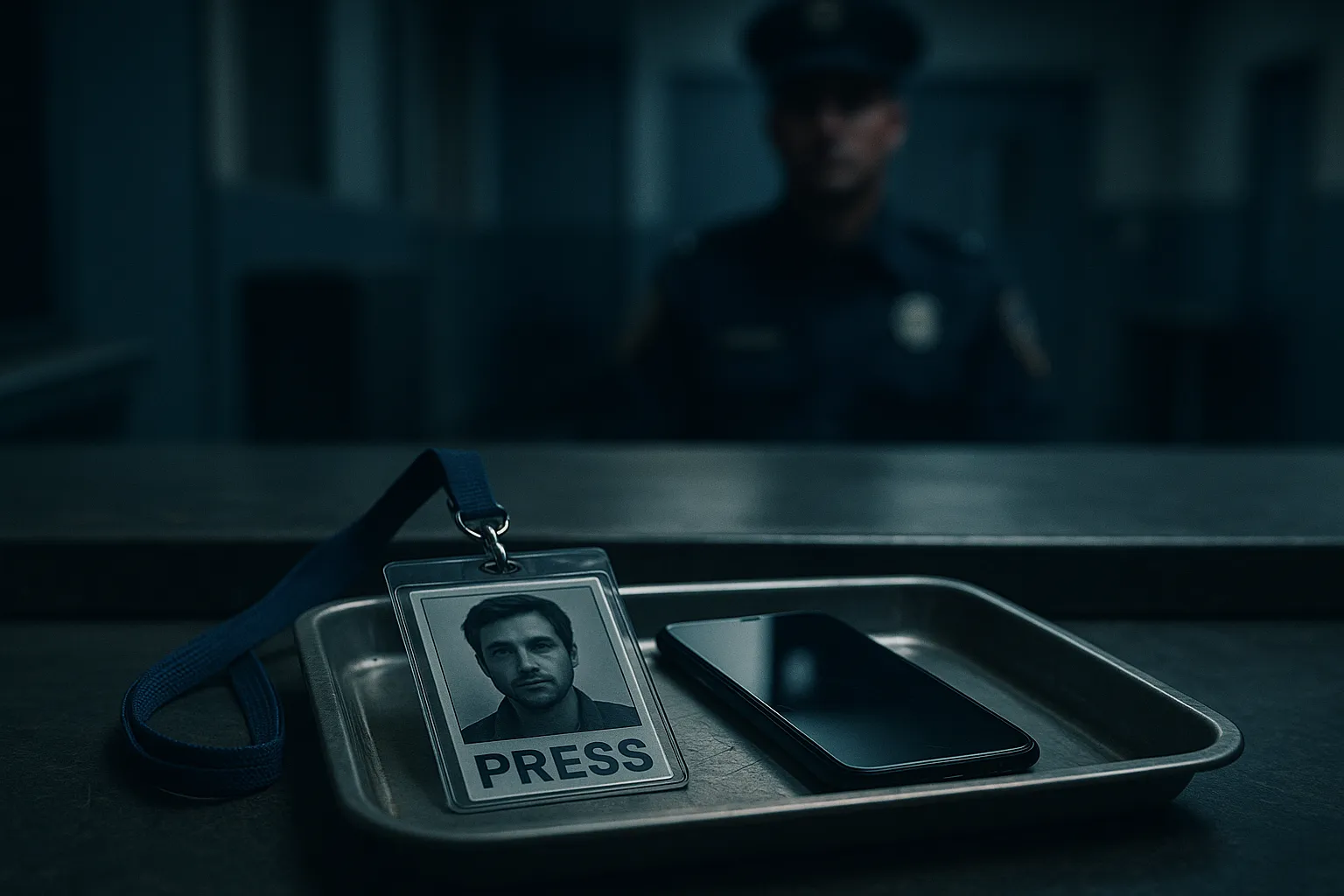
What Happened to the 11 Journalists Detained Before Turkey's NATO Summit?
At least 11 journalists were detained or arrested in Turkey between June 23 and July 7, 2026, according to a CPJ tally, most of them in Istanbul and Ankara. The charges varied but clustered around two accusations: spreading disinformation and belonging to a terrorist organization. Sputnik Turkey's Ali Çağatay was detained June 25 over a social media post alleging police corruption and formally arrested two days later. Kaos GL editor Yıldız Tar was detained June 23 and arrested June 25 on suspicion of terrorist organization membership. Niha+ correspondent Abbas Vural was detained July 5 during a home raid in Kocaeli and was reportedly beaten by officers. T24's Buse Söğütlü and Odatv's Ceren Erdoğdu were both picked up in Ankara on July 5 and held until July 8, the day the summit closed.
CPJ's Turkey representative did not mince words: "Whether or not the NATO summit is being used as an excuse, the detention or arrest in Turkey of nearly a dozen journalists in the past two weeks is unacceptable." The organization called on Turkish authorities to free imprisoned journalists and reform the disinformation statute used against several of those swept up.
Who Is Alican Uludağ, and Why Was He Detained Twice in Five Months?
Alican Uludağ has covered Turkish courts for Deutsche Welle's Turkish service for 18 years, reporting on corruption cases and politically sensitive trials. Prosecutors first arrested him in February 2026 and held him for 90 days pretrial before a court released him in May. On July 21, plainclothes officers detained him again, this time over a social media post in which he said police routinely hand case files and detention footage to pro government reporters before suspects appear in court. Prosecutors opened an investigation under Articles 217/A and 216 of the penal code, covering "publicly disseminating misleading information" and "inciting hatred and hostility." An Ankara court released him the next day after about 25 hours in custody, but barred him from leaving the country and ordered him to report to a police station four times a week. Germany's government said it was "highly irritated" by the renewed detention of a DW correspondent, reigniting a diplomatic friction point between Berlin and Ankara that first flared during Uludağ's original arrest.
Why Is Turkey Cracking Down Around a NATO Summit?
Turkey hosted NATO's 36th summit in Ankara on July 7 and 8, 2026, only its second time hosting the alliance since 2004, and used the run up to tighten its grip on domestic coverage. The timing fits a longer trajectory rather than a one off. Turkey fell to 163rd out of 180 countries in the 2026 RSF World Press Freedom Index, down from 159th the year before, as its score slid from 29.40 to 27.94. More than 200 journalists have been jailed in Turkey over the past five years, and 13 remain behind bars, making it one of the world's most prolific jailers of the press even before this summit's detentions are added to the count. Nearly every charge brought against the 11 journalists, disinformation, inciting hatred, or alleged terrorist ties, maps onto the same handful of statutes RSF flagged as Turkey's preferred prosecutorial tools this year.
What Should Journalists Do Before Covering High Risk Events in Countries Like Turkey?
Uludağ's case and the wider summit sweep point to the same lesson: a single post can trigger detention within hours, and a past release offers no protection against a second arrest. Journalists covering politically sensitive events under similar legal regimes can reduce their exposure by:
- Arranging a lawyer in advance of any high visibility assignment, since Uludağ's release depended on a judge intervening within a single day, not a drawn out appeal.
- Treating any public comment on an open investigation or court case as a potential charge under disinformation or incitement statutes, and routing sharper commentary through editors based outside the country, a precaution Cuban journalist Austin Llerandi's interrogation over a newsletter's coverage also underscored.
- Backing up reporting material to encrypted cloud storage before a known high risk period, a summit, an election, a mass trial, so a confiscated phone or laptop does not cost months of work.
- Notifying an outside press freedom group such as CPJ immediately after any detention, since a documented pattern of short, repeated custody is what drew international attention to both Uludağ and the other 10 journalists picked up around the summit.
Why Should Journalists and Activists Elsewhere Care?
Most coverage of this crackdown centers on Uludağ, in part because his release within a day makes for a tidier story than the other 10 journalists who got the standard treatment: a few hours or days in custody, then release with no charges that stick. That is the more consequential pattern. Turkey did not need one dramatic arrest to manage coverage of its NATO summit. Short, repeated detentions that individually generate little international attention, but collectively cycle a dozen journalists through custody in two weeks, are cheaper and harder to litigate abroad than an outright ban. Uganda took the blunter route this year, shutting down its largest newsroom outright. The U.S. Justice Department chose a third option, using subpoenas to compel New York Times reporters to reveal sourcing on a story about Air Force One. Turkey's version splits the difference, and it is the model most likely to spread to other governments hosting high profile diplomatic events they would rather cover on their own terms.
Sources: Committee to Protect Journalists, Turkish Minute, and Reporters Without Borders.