Aug 11, 2026 · 6 min read
Flock Let a Cop Run His Girlfriend's Plate 124 Times
An eight year veteran of the Milwaukee Police Department typed the word "investigation" into a search box roughly 180 times to track a partner and her ex. Nothing in the system stopped him, a victim caught him, and he left court with probation and a $500 fine.
The interesting part of the Josue Ayala case is not that an officer abused a surveillance tool. Officers have abused every database ever handed to them. The interesting part is the ratio: 179 unauthorized searches, one free text justification field, zero automated interventions, and a detection method that depended entirely on the victim doing her own forensics.
Key Takeaways
- Josue Ayala, a Milwaukee police officer, ran a partner's plate 124 times and her ex's plate 55 times through Flock Safety, and was sentenced on July 15, 2026 to a year of probation and a $500 fine.
- A Washington Post investigation identified at least 50 cases of officers charged or accused of unauthorized plate reader surveillance, 26 of them targeting wives, girlfriends or former partners, with Flock used in 46 cases.
- Flock runs more than 120,000 cameras and scans roughly 20 billion plates a month for over 7,000 organizations, yet less than 1% of scanned vehicles connect to any crime.
- The Institute for Justice has documented at least 26 cases since 2018 of innocent motorists pulled over, held at gunpoint or jailed because of plate reader errors.
- Every federal attempt to restrain the technology in 2026 has failed, including a bipartisan amendment voted down in House committee and stalled bills from Reps. Tim Burchett and Thomas Massie.
What Did the Milwaukee Officer Actually Do?
He searched two license plates, over and over, and typed a lie into the box that was supposed to prevent exactly that. Prosecutors said Ayala, assigned to Milwaukee Police District 2, accessed the department's Flock database close to 180 times after suspecting his partner was seeing her ex. Each query carried the same justification: "investigation."
He pleaded guilty to a reduced misdemeanor and resigned as part of the agreement. A Milwaukee County judge sentenced him to a year of probation and a $500 fine, with no contact with either victim and a mental health assessment attached.
Run the arithmetic on the penalty. One dollar and change per unauthorized query into a person's movement history. That is the current market price of stalking someone through a national camera network.
How Was the Misuse Discovered?
A victim looked up her own plate on HaveIBeenFlocked.com, a site that republishes Flock audit logs that some local governments release publicly. The department did not catch it. The vendor did not catch it. A civilian searching a transparency database did.
That detection pattern repeats across the cases CNN documented in its review of Flock misuse. Six former Savannah Police Department employees came under criminal investigation over alleged Flock misuse. The Georgia Bureau of Investigation arrested five former Albany, Georgia officers on July 6, 2026 on charges including Misuse of License Plate Data. A North Carolina officer was arrested for allegedly tracking her boyfriend's ex wife. Flock only introduced a voluntary audit assistance tool, which flags repeated searches of one vehicle or queries outside an officer's shift, in April 2026.
Voluntary is doing heavy lifting in that sentence. A control an agency can decline to enable is a control that will be declined by exactly the agencies that need it.
Why Does the Database Design Invite Abuse?
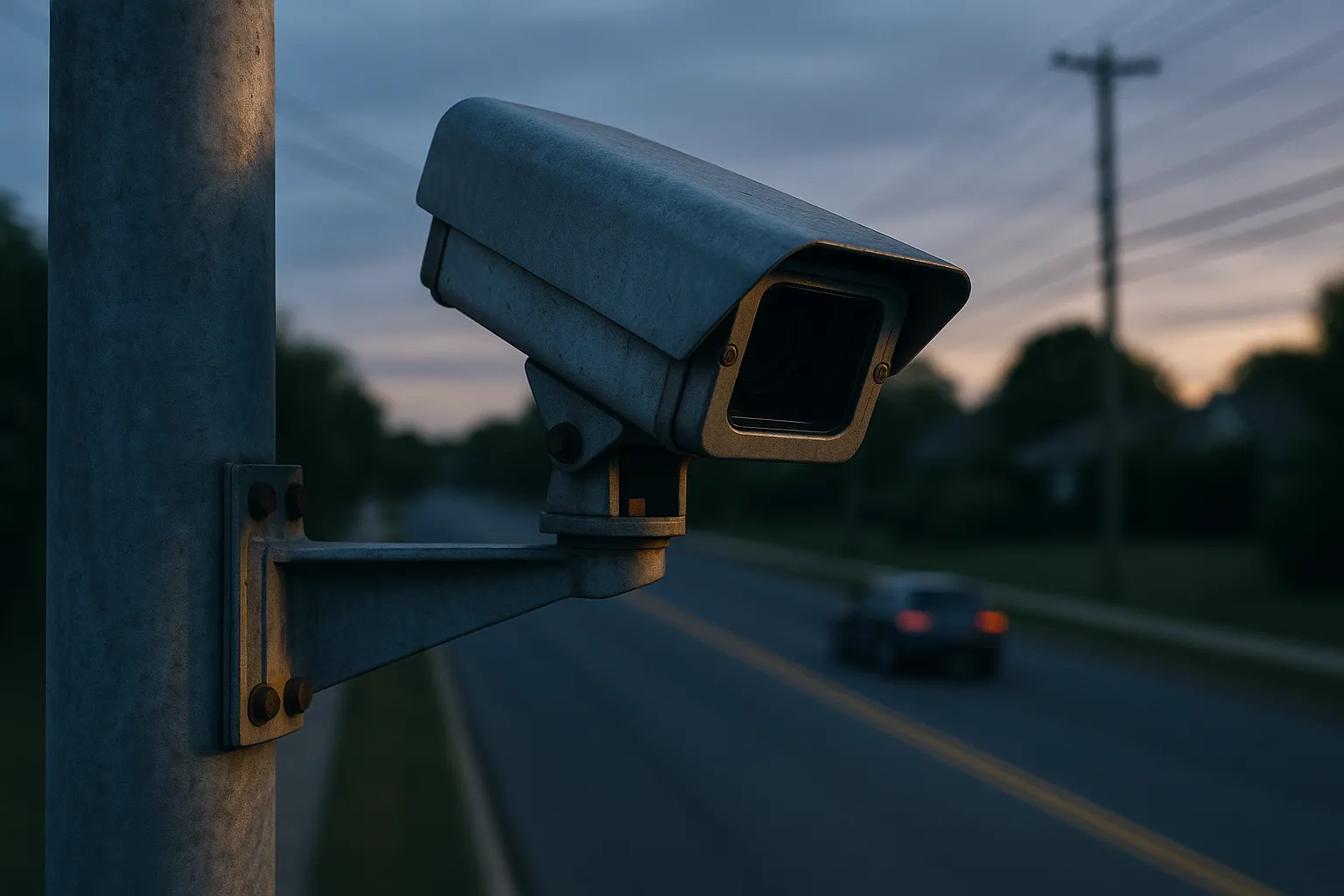
Because it collects everyone by default and gates access with a text field nobody reads. Flock's own figures, cited in The Washington Times, describe more than 120,000 cameras detecting vehicles up to 75 feet away, roughly 20 billion plate scans a month, contracts with over 7,000 organizations, and retention of up to 30 days. Less than 1% of those scans relate to a crime.
So 99% of the corpus is a movement log of people who did nothing. Thirty days of retention against 20 billion monthly scans means the searchable record covers the routine driving of most of the country: the clinic, the union hall, the lawyer's office, the house you slept at. An officer with a login queries that. The system asks why. He types a word.
Access controls that rely on self declared purpose are not access controls. They are logging, and logging only helps after the harm, which is precisely how these cases keep surfacing. Compare it to the vendor exposure that led the LAPD to end its Flock contract. Different failure, same root cause: a pool of data too large and too loosely fenced to be governed by policy documents.
What Happens When the System Is Simply Wrong?
People get boxed in on a freeway at gunpoint. The Institute for Justice has documented at least 26 cases since 2018 of innocent motorists pulled over, held at gunpoint or jailed after plate reader errors, most since 2022, with some victims injured by police dogs.
In one Wisconsin incident, a Flock alert tied a silver SUV to an active homicide investigation. Police shut down I-94 in Waukesha County and held the occupants at gunpoint. Wrong driver, wrong car, stale alert nobody had cleared.
The errors come from two places: optical character recognition misreading a plate, and hotlists that never get corrected. Both are compounded by officers treating a machine generated hit as probable cause rather than a lead.
Why Journalists and Organizers Should Care
A plate database answers the one question a reporter most needs to keep private: who did you meet, and where. Source protection spent a decade encrypting message contents, and that largely worked. Movement metadata was never encrypted at all. A car parked outside a whistleblower's house at 9pm on a Tuesday is now a fact in a commercial system that thousands of agencies can query with a one word justification.
The Ayala case is the honest version of the threat model. Not a coordinated state operation, just one person with credentials and a personal motive. The same login that tracked a girlfriend can track a protest organizer, a domestic violence survivor who moved, or a freelancer who filed a story a chief disliked. Nothing distinguishes those searches, because the field they are typed into distinguishes nothing.
Data sharing widens it. Once a local department's scans flow into a broader network, the people who can pull a movement history are no longer only the ones your city council oversees, which is what surfaced when a California city shut down its cameras after federal agents accessed the data. Countermeasures are limited: vary routes and timing for sensitive meetings, avoid your own registered vehicle for a first meeting with a source, and check whether your locality publishes Flock audit logs so you can search your own plate.
Is Anything Going to Change?
Not at the federal level, so far. A bipartisan amendment to the BUILD America 250 Act from Reps. Scott Perry and Jesús García that would have restricted plate readers was voted down in committee, with both the chairman and the ranking member opposing. Rep. Tim Burchett's Protection Against Mass Surveillance Act, introduced July 21, 2026, would bar federal agencies from buying or accessing these systems. Rep. Thomas Massie wants federal funds stripped from departments that run them. Neither has moved.
The pressure is local instead. Nearly 100 localities have deactivated cameras or cancelled contracts, and more than 33 cases of physical camera sabotage have been documented nationally. That is what a policy vacuum looks like from the ground: cities opting out one at a time, and a 20 year old in West Virginia arrested for cutting a camera down.
Meanwhile the audit logs keep producing cases. Expect the count of 50 accused officers to be badly out of date within a year, because auditing is the only control that currently works and most departments have not switched it on.