Aug 09, 2026 · 6 min read
Ethiopia Raids Addis Standard, Detains Its Editor
Over three days in August 2026, Ethiopian security forces seized Addis Standard's editor in chief, assaulted him, raided the Addis Ababa newsroom and carried out its cameras and microphones. Then the landlord gave the outlet three days to leave. No charges have been filed.
It took seventy two hours to take a newsroom apart. Not with a court order, not with an indictment, but with a detention, a raid and a piece of paper from a landlord who had been leaned on by the police. Addis Standard, founded in 2011, is still publishing. It is doing so without its studio, without most of its production gear, and under an eviction clock.
Key Takeaways
- Yonas Kedir, editor in chief of Addis Standard, was seized on August 1, 2026, physically assaulted, and held for roughly 24 hours of interrogation before being released without charge.
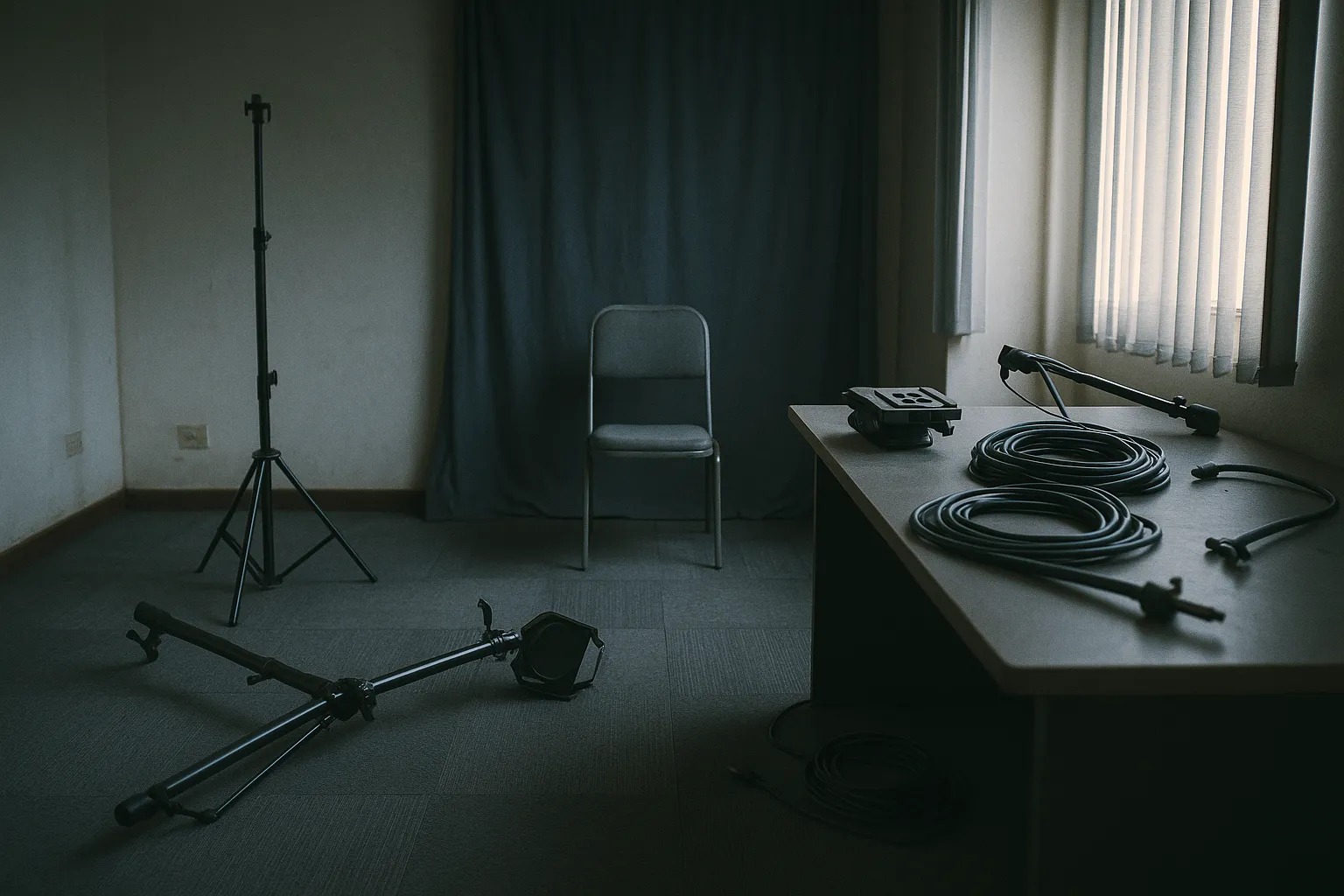
- On August 2, armed security and intelligence personnel entered the Addis Ababa newsroom without a warrant and removed cameras, microphones and audio and video production equipment, deliberately destroying studio lighting and stands on the way out.
- On August 3 the building owner, acting under police pressure according to the outlet, served a notice giving Addis Standard three days to vacate its offices.
- The Ethiopian Media Authority revoked the outlet's online media registration certificate on February 24, 2026, a decision Addis Standard is still challenging in court, and managing editor Million Beyene was held incommunicado for close to two weeks in April 2026.
- CPJ Africa Program Coordinator Muthoki Mumo called the sequence "an alarming escalation in Ethiopian authorities' campaign to dismantle one of the country's leading independent news organizations."
What Happened to Addis Standard in August 2026?
Three separate actions landed on three consecutive days, each one removing a different thing the newsroom needed to function. According to the Committee to Protect Journalists, unidentified security personnel took Yonas Kedir on August 1 and questioned him for about a day. He was beaten during the detention. He was released without any charge being filed.
The following day a heavily armed team from security and intelligence services walked into the offices of JAKENN Publishing, which publishes Addis Standard, and left with the multimedia unit's working equipment. In its own account of the raid, the outlet described gear "essential to the daily operation of our newsroom and multimedia unit" being carried away, and a later inspection finding lighting systems, light stands and microphone stands deliberately broken rather than confiscated.
Then the eviction notice. Three days, from a landlord the publication says was compelled by police. Nobody has been charged with anything.
Why Was Yonas Kedir Detained?
His interrogators focused on two pieces of reporting, which tells you more about the motive than any official statement would. Questioning centered on a question Kedir had put to the AFRICOM commander about Ethiopia's role in the conflict in Sudan, and on the outlet's coverage of renewed fighting in Western Tigray.
The pressure was not applied over a licence technicality. It was applied over specific stories touching military conduct and regional war. Human Rights Watch documented the same logic across the sector, noting that Arts TV and Ahadu FM received final written warnings on July 31, 2026 and that regulators repeatedly invoke vague "national security" and "national interest" grounds.
Is This the First Time Ethiopia Has Targeted Addis Standard?
It is the sixth documented action against this single newsroom since 2020. Editor Medihane Ekubamichael was detained in 2020. The publishing licence was withdrawn for several days in 2021. Police raided the offices in 2025 and held three managers. The Media Authority pulled the online registration certificate in February 2026. Million Beyene was seized in April 2026. Now this.
Six years, six escalations, and the interval between them is shortening: four of the six fall inside the last eighteen months. Reporters Without Borders ranks Ethiopia 148th of 180 countries on its press freedom index, and CPJ's annual census has repeatedly placed the country among sub Saharan Africa's worst jailers of journalists, second only to Eritrea.
The method is also recognisable beyond Ethiopia. It closely echoes what happened when Uganda's military shut down its largest newsroom, and the pre emptive sweep in which Turkey detained 11 journalists ahead of a NATO summit. In each case the state avoided a courtroom entirely and went after the physical and logistical base of the reporting instead.
What Does an Equipment Seizure Expose About Sources?
Far more than the footage on the memory cards. A camera, a laptop and a phone taken from a newsroom are not evidence of a crime; they are a map of everyone who talked to that newsroom.
A single seized device typically holds raw interview audio and video with faces and voices intact, unedited files where a source said things that never reached publication, contact lists, message history, browser sessions still logged into email and cloud storage, calendar entries showing who a reporter met, and location metadata embedded in photos. Password managers left unlocked hand over everything else. None of that requires a forensic lab.
The practical countermeasures are unglamorous and they work:
- Full disk encryption, powered off. FileVault, BitLocker and LUKS only protect a device that is shut down, not one seized while sleeping and logged in. Power down before travel, before a knock at the door, before anything.
- Short retention by default. Raw footage and interview audio should move off the device to encrypted storage and be deleted locally on a fixed schedule. What is not on the machine cannot be read off it.
- Compartmentalised accounts. Sensitive source communication should not share an account, a device or a recovery phone number with routine newsroom mail. A compromise of one should not cascade.
- Hardware security keys for two factor authentication. Codes sent by SMS can be intercepted by a network operator and are trivially compelled from a seized handset. A physical key that stays off site cannot be taken along with the laptop.
- Remote wipe, tested in advance. Mobile device management and platform level wipe features are worthless if nobody has ever run them. Rehearse it, and know that a device offline in a bag will not receive the command.
- Minimise what the device holds. Sign out of cloud accounts, clear cached archives, and travel with the least data that still lets you work.
Legal exposure follows the same shape. A source protected only by the reporter's promise is not protected once the reporter's hardware is in a police evidence room.
What This Means for Your Inbox
Almost every newsroom relationship starts in an email thread, which makes the mailbox the highest value object in any seizure. A confiscated laptop with a browser still signed in gives an interrogator years of correspondence, sorted and searchable, complete with names, attachments and the exact timing of every exchange.
Message content is only part of it. Headers, timestamps and delivery metadata reconstruct a pattern of contact even when the body of a message says nothing incriminating, and that pattern is often enough to identify a source by elimination. Much of this material also sits outside the reporter's control once it has leaked, as in Proton's discovery of 116,000 journalist records on the dark web.
This is not a problem confined to Addis Ababa. In Islamabad, two reporters were taken from their office by men in police uniform and have not been seen since, leaving the same question about what their accounts were still signed in to. If a state can lift a newsroom's mail archive by walking through the door, then the security of your correspondence rests on how little of it your devices carry and how quickly a signed in session expires, not on where your provider is headquartered.
What Happens Next?
Addis Standard is still pursuing its court challenge to the February 24 revocation, and it is still publishing. The eviction deadline, the missing equipment and the absence of any formal charge leave the outlet in a position that is difficult to litigate: there is no case to defend, only a set of facts on the ground.
Human Rights Watch noted that Ethiopia's international partners have stayed quiet through this. That silence is the variable most likely to determine what the next escalation looks like, and how soon it arrives.