Jul 23, 2026 · 7 min read
Maryland and Connecticut Ban Surveillance Pricing
Two states outlawed charging shoppers different prices based on their personal data this year, but Colorado's governor vetoed a nearly identical bill as overbroad, exposing a fight over how far these laws should go.
Book the same flight twice, on two different laptops, and you can get two different fares. One version of you searched five times this week and looked exhausted; the other cleared cookies and looked like a bargain hunter. The airline saw both, and priced accordingly. That is surveillance pricing, and in 2026 state lawmakers finally started writing rules against it, though not everyone agrees on how far those rules should reach.
Key Takeaways
- Maryland became the first state to ban surveillance pricing when Gov. Wes Moore signed House Bill 895, the Protection From Predatory Pricing Act, on April 28, 2026, effective October 1, 2026.
- Connecticut followed on June 4, 2026, when Gov. Ned Lamont signed HB 5563, making it the second state to prohibit the practice, with an effective date of July 1, 2027.
- Colorado Gov. Jared Polis vetoed a broader surveillance pricing and wage setting bill, HB26-1210, on June 2, 2026, arguing it was too sweeping even though it had already cleared the legislature.
- The Federal Trade Commission opened a Section 6(b) study of surveillance pricing in July 2024 and reported in January 2025 that at least 250 businesses across grocery, apparel, and home goods retail had adopted some form of individualized pricing, but it has not brought an enforcement action.
- More than 40 surveillance pricing bills have been introduced across at least 24 states as of mid 2026, with New Jersey, New York, and California all advancing their own versions.
What Is Surveillance Pricing?
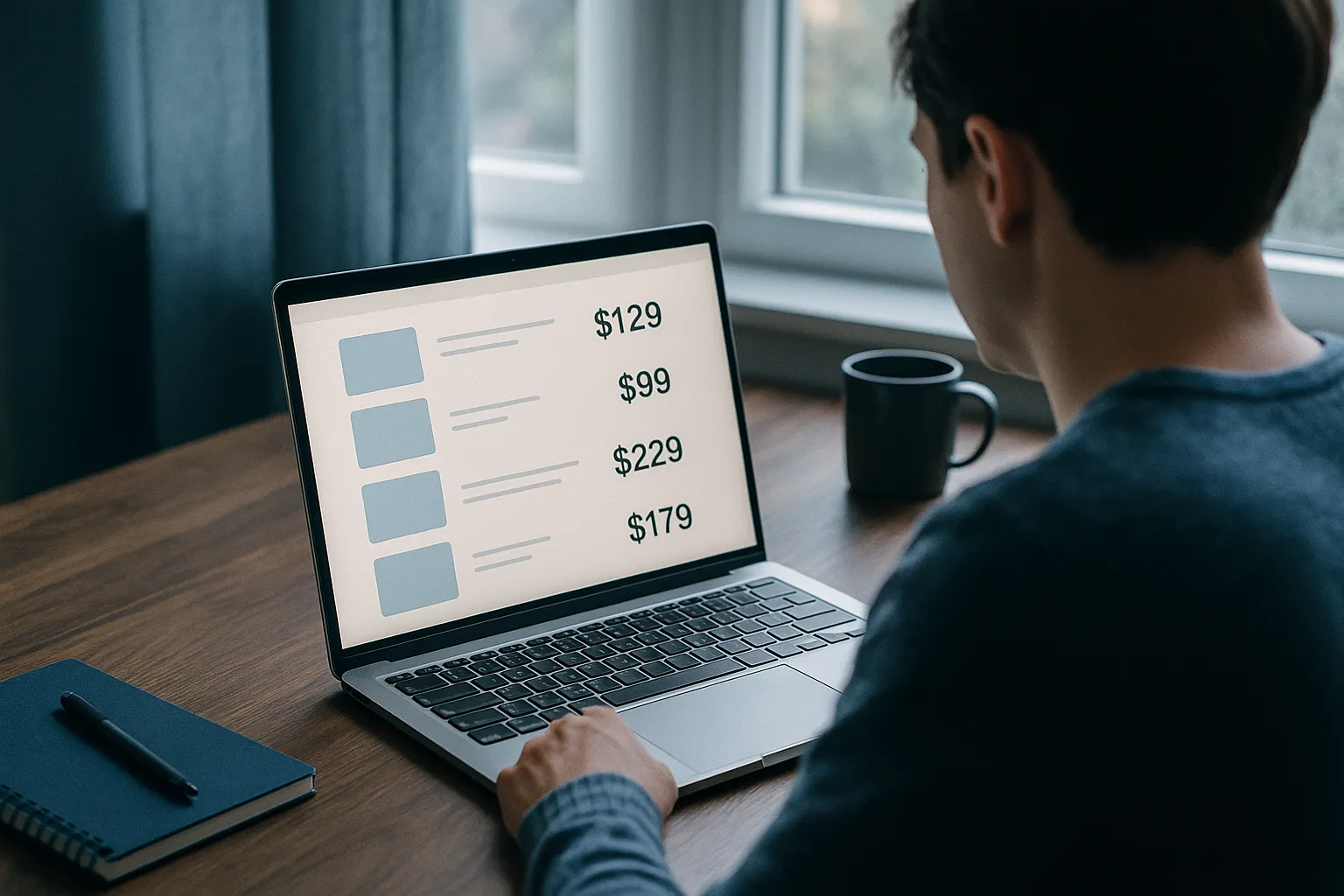
Surveillance pricing is the practice of setting a customized price for a specific shopper, rather than a market wide price, based on personal data collected through digital tracking. Retailers and platforms have long adjusted prices for supply and demand. What changed is the granularity of the inputs: browsing history, real time location, device type, purchase history, inferred income, and even inferred family size can now feed into pricing engines that quote two shoppers different amounts for an identical item at the identical moment.
The Federal Trade Commission began investigating the practice in July 2024 under its Section 6(b) authority, sending orders to eight firms including Mastercard, McKinsey, and Accenture that build or license pricing software. Its January 2025 research summary found that pricing intermediaries can already target promotions down to a customer's skin tone or specific demographic profile, and that the underlying data comes from loyalty programs, browser fingerprinting, and third party data brokers alike.
What Do Maryland and Connecticut's New Laws Require?
Maryland and Connecticut both prohibit food retailers from pricing groceries based on a shopper's personal data, but neither state bans data driven pricing outright. Maryland's Protection From Predatory Pricing Act bars grocery stores and third party delivery platforms from using surveillance pricing, and separately bars using protected class data in ways that deny goods or services to a protected group, according to IAPP's analysis of the law. Enforcement sits with the Consumer Protection Division of the Maryland Attorney General's office, there is no private right of action, and violators face fines of up to $10,000 per violation, rising to $25,000 for repeat offenders.
Connecticut's HB 5563, signed by Gov. Lamont on June 4, 2026, mirrors that grocery sector focus but takes effect later, on July 1, 2027, giving retailers a longer runway to redesign pricing systems, per EPIC's summary of the law. Both statutes carve out ordinary loyalty program discounts, promotional pricing, and group discounts such as senior or veteran pricing, so long as any shopper in that group can access the same offer.
Why Did Colorado's Governor Veto a Similar Bill?
Colorado Gov. Jared Polis vetoed HB26-1210 because he judged it broader than the industry specific bans Maryland and Connecticut passed. The bill, formally titled "Prohibit Surveillance Price & Wage Setting" on the Colorado General Assembly's own bill page, would have restricted surveillance based pricing and wage setting across essentially any industry, not just groceries, and would have covered any algorithm or software using statistical modeling or AI to set an individual price or wage.
In his veto letter, Polis wrote that the bill "takes a broader approach to capture any technology that incidentally influences a price or wage amount," and warned it could inadvertently block ordinary discounts consumers already rely on. That reasoning is worth watching closely, because it is functionally the same argument retailers and tech trade groups have made against every other state's bill, and it is now the first time a sitting governor has adopted it as grounds for a veto rather than industry lobbying alone. Expect the Polis veto letter, not just industry comment letters, to show up as a template in opposition testimony the next time a broad version of this bill reaches a governor's desk.
What's Happening in Other States?
New Jersey lawmakers passed the Fair Price Protection Act in early July 2026 and sent it to Gov. Mikie Sherrill; if she signs it, the law would take effect one year later and would bar grocery and delivery pricing based on biometric, genetic, or protected class data. New York already has a narrower rule in effect: its Algorithmic Pricing Disclosure Act, active since November 10, 2025, does not ban personalized pricing but requires point of sale disclosure that "this price was set by an algorithm using your personal data." A tougher follow up, the One Fair Price Act, has cleared the legislature and awaits Gov. Kathy Hochul's signature, according to Wilson Sonsini's analysis. California's AB 2564 passed the state Assembly on May 27, 2026, and would prohibit retailer surveillance pricing statewide if it clears the Senate and reaches Gov. Newsom.
Litigation is moving faster than legislation in some cases. Two putative class actions against JetBlue, filed in the Eastern District of New York in April and May 2026, allege the airline used tracking technology to inflate fares based on a traveler's browsing behavior. A separate class action accuses the Washington Post of using subscriber data to charge its longest tenured, most loyal readers higher renewal prices.
What Should Compliance Officers Do Now?
Companies operating in food retail, delivery, or travel should not wait for a single national standard, because none is coming soon. A practical starting checklist:
- Inventory every pricing engine, coupon system, and personalization tool that ingests location, browsing, loyalty, or demographic data, and map which states each system touches.
- Confirm that any price or discount variation can be explained by a legitimate, disclosed reason, such as a loyalty tier, a promotional code, or a documented cost difference like delivery distance.
- Watch effective dates closely: Maryland's law is live October 1, 2026, Connecticut's arrives July 1, 2027, and New Jersey's would follow a year after Sherrill's signature.
- Track the Colorado veto letter and California's Senate vote as leading indicators, since both will shape whether the next wave of state bills lean toward Maryland's narrow grocery ban or Colorado's broader, now vetoed, version.
Looking Ahead
The surveillance pricing fight is no longer theoretical, but it is also not settled. Maryland and Connecticut proved a narrow, sector specific ban can pass and survive a governor's desk; Colorado proved a broader version can clear the legislature and still die there. With the FTC sitting on an unfinished study, more than 40 bills active nationwide, and JetBlue and the Washington Post already defending pricing algorithms in federal court, the next twelve months will likely decide whether surveillance pricing regulation becomes a patchwork of grocery specific carve outs or something closer to Colorado's rejected, industry wide approach.
The federal answer arrived on 19 August 2026, and it is not a ban. The FTC voted 2-0 to propose an enforcement policy statement that would treat undisclosed personalized pricing as a Section 5 violation, which means Washington is regulating candor while the states regulate conduct. We break down what that disclosure duty requires in the FTC's personalized pricing enforcement policy statement.
Sources: IAPP, EPIC, Colorado General Assembly, Federal Trade Commission, and Wilson Sonsini.