Mar 22, 2026 · 6 min read
Super Micro's Co-Founder Used Hair Dryers to Erase Serial Numbers on $2.5 Billion in AI Chips Headed for China
The DOJ charged three men with routing Nvidia's most advanced AI servers through shell companies in Southeast Asia, peeling off labels with heat guns, and smuggling $510 million worth of export controlled hardware to China. Super Micro's stock dropped 25% overnight.
Wally Liaw co-founded Super Micro Computer in 1993 and spent three decades building it into one of the world's largest AI server manufacturers. On March 19, 2026, federal prosecutors revealed how he allegedly spent part of that time building something else: a covert pipeline to funnel America's most restricted AI technology directly to China.
The Department of Justice indictment charges Liaw and two associates with conspiring to smuggle $2.5 billion in Nvidia AI servers to China, evading export controls that have been in place since 2022. The scheme involved shell companies, fake shipping routes, and the low tech trick of using hair dryers to peel serial number labels off real servers and stick them on decoys left behind.
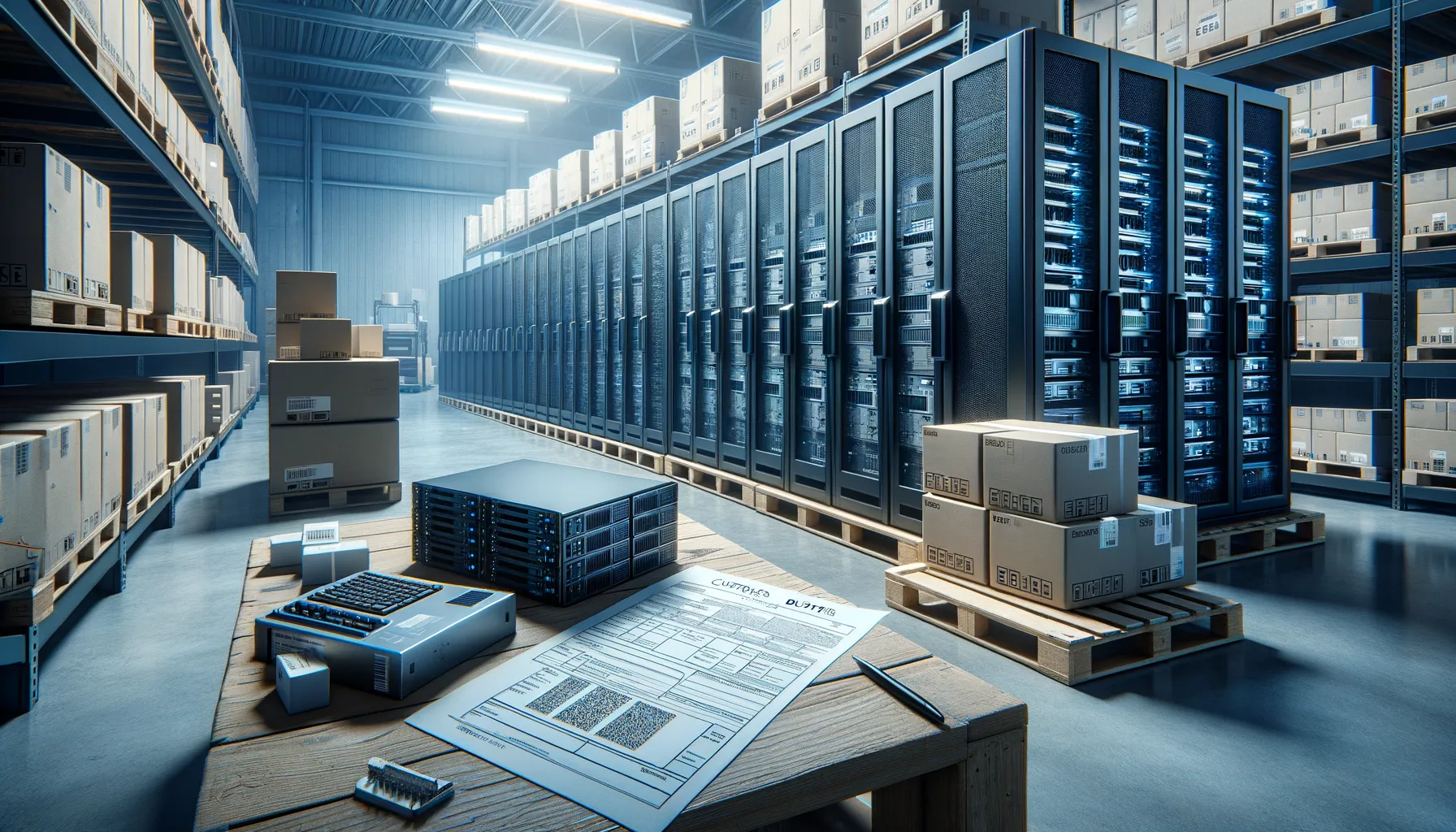
How the Scheme Worked
The operation was deceptively simple. Super Micro sold $2.5 billion in servers to companies in Southeast Asia that appeared to be legitimate customers. But according to prosecutors, at least $510 million worth of those servers, containing Nvidia's most advanced B200 and H200 GPUs, were repackaged and forwarded to buyers in China.
To cover their tracks, the defendants allegedly used hair dryers and heat guns to carefully remove manufacturer labels and serial numbers from the real servers. They placed those labels on dummy machines that stayed in Southeast Asia, creating a paper trail showing the equipment never left its approved destination. The real servers, now unmarked, were packed into plain boxes and shipped to China.
The third defendant, Willy Sun, served as what prosecutors call a "fixer," a third party broker who coordinated the physical repackaging and rerouting. Steven Chang, a sales manager at Super Micro's Taiwan office, allegedly managed the relationships with the Southeast Asian intermediary companies.
Why These Chips Matter
The B200 and H200 are Nvidia's flagship AI training GPUs. They power the data centers that train large language models, run military simulations, and process surveillance data at scale. The U.S. government has restricted their export to China since 2022, specifically because they could accelerate China's military AI capabilities, autonomous weapons development, and mass surveillance infrastructure.
Each server containing these chips can cost hundreds of thousands of dollars. At $510 million in confirmed diversions, the scheme delivered enough computing power to meaningfully advance AI development programs that the U.S. government has explicitly tried to slow down.
A Financial Times investigation estimated that China secured roughly $1 billion in restricted AI chips within three months of the Trump administration tightening export controls. This case shows one of the routes those chips allegedly took.
The Fallout
Super Micro's stock plunged over 25% in premarket trading after the indictment was unsealed. The company quickly distanced itself from the defendants, placing employees on administrative leave and terminating its relationship with Sun. In a statement, Super Micro called the alleged conduct "a contravention of the Company's policies and compliance controls."
Each defendant faces three federal charges: conspiracy to violate the Export Controls Reform Act (up to 20 years), conspiracy to smuggle goods (up to 5 years), and conspiracy to defraud the United States (up to 5 years). Liaw and Sun have been arrested. Chang remains a fugitive.
U.S. Attorney Jay Clayton said the defendants operated "through a tangled web of lies, obfuscation, and concealment, all to drive sales and generate revenues in violation of U.S. law."
The Bigger Problem: Export Controls Have a Smuggling Problem
This case exposes a fundamental weakness in how the U.S. enforces AI export controls. The government can restrict which chips are sold to which countries, but it cannot easily verify where those chips end up after the initial sale. Southeast Asian transshipment hubs have become the primary loophole.
The scheme did not require sophisticated hacking or advanced tradecraft. It required a co-founder willing to look the other way, a sales manager willing to manage fake customers, and a fixer willing to swap labels in a warehouse. The technology to circumvent one of the most consequential technology restrictions of the decade was a hair dryer.
For researchers and policymakers tracking AI governance, this case raises uncomfortable questions. If a company's own co-founder can subvert export controls for years, what does that say about the effectiveness of the entire regime? And if $510 million in chips is what prosecutors caught, how much slipped through?
What This Means for AI Safety
The implications extend beyond export law. Every advanced AI chip that reaches an unrestricted environment is computing power that can be used for purposes the exporting country cannot monitor or control. That includes training surveillance models, generating deepfakes at scale, or developing autonomous military systems.
The case also demonstrates how traditional supply chain integrity problems, label swapping, transshipment fraud, document falsification, map directly onto the AI hardware supply chain. The same techniques used to smuggle consumer electronics or sanctioned goods now apply to the most strategically significant technology of the decade.
As Anthropic discovered when it refused Pentagon mass surveillance contracts, the intersection of AI and national security creates pressures that not every company navigates ethically. Super Micro's case suggests that some were not even trying.
What You Should Watch For
This case will likely trigger several developments worth monitoring:
- Stricter end use verification. Expect the Commerce Department to impose more aggressive post sale auditing requirements on AI hardware manufacturers.
- Nvidia supplier scrutiny. Nvidia's largest customers will face increased pressure to demonstrate their supply chains are clean.
- More indictments. The DOJ's announcement signals a broader crackdown on AI chip smuggling networks. If one co-founder was doing this, others may be too.
- Stock volatility. Any AI hardware company with significant Asia Pacific sales may face investor scrutiny over export compliance.