Feb 13, 2026 · 5 min read
Russia Blocked WhatsApp and Is Pushing a State Surveillance App Instead
Over 100 million users lost access to encrypted messaging overnight. The replacement shares your data with authorities on request.
WhatsApp Goes Dark in Russia
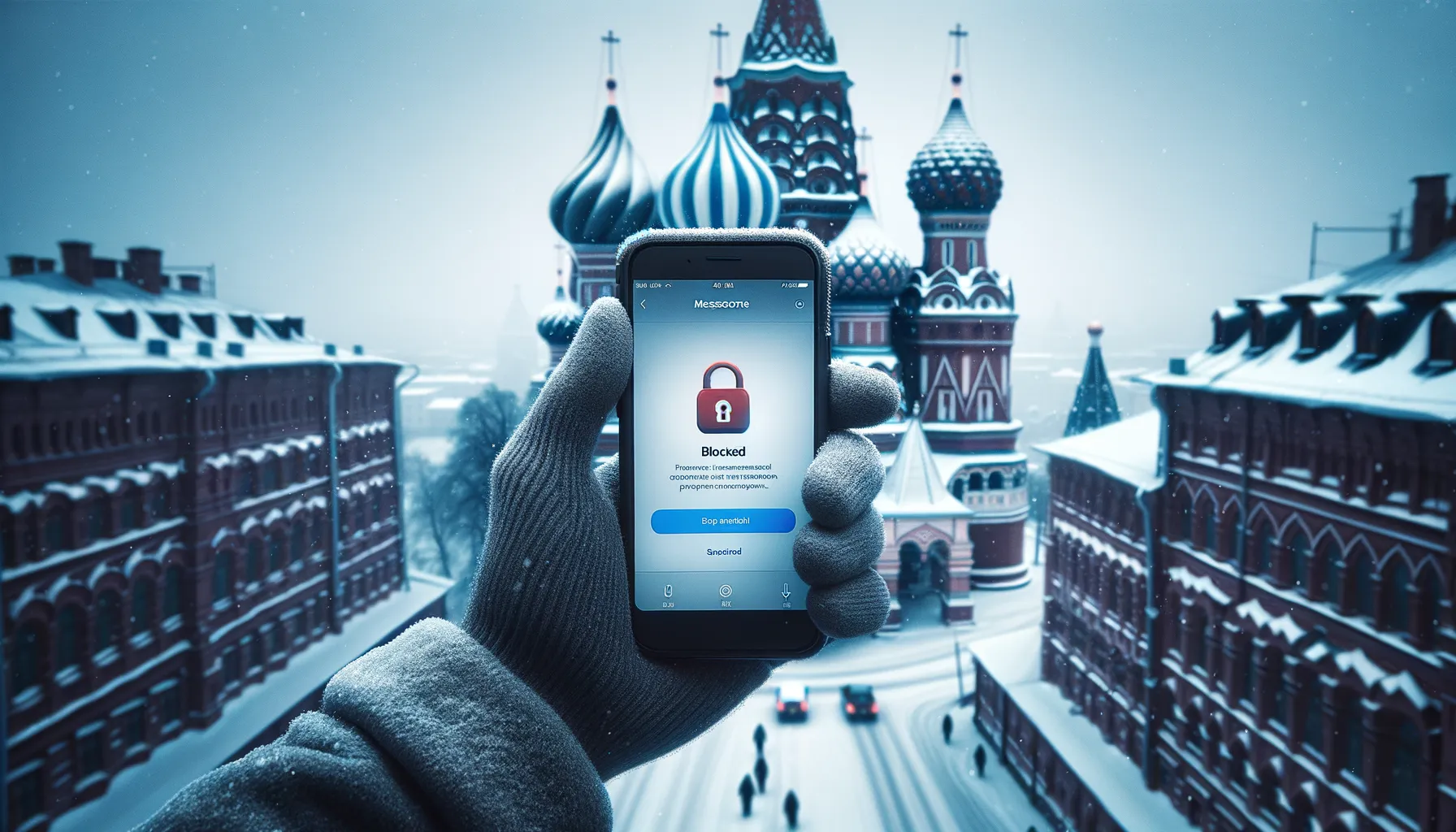
Russia has fully blocked WhatsApp, cutting off more than 100 million users from the encrypted messaging platform. The block, implemented on February 12, 2026, came after WhatsApp's parent company Meta refused to comply with Russian data localization laws. WhatsApp domain names were removed from Russia's national DNS registry, preventing devices inside the country from connecting to the service.
"Today the Russian government attempted to fully block WhatsApp in an effort to drive people to a state owned surveillance app," WhatsApp said in a statement. Users can still access the platform through VPNs, but the Kremlin has been steadily restricting VPN services as well.
Meet Max: Russia's State Backed Replacement
The Kremlin is steering users toward Max, a state backed messaging app linked to VK, the social network controlled by figures close to the Russian government. Launched in 2025 with full state backing, Max is a multifunction "super app" modeled after China's WeChat. It combines messaging with e-commerce, government services, medical appointments, and municipal functions.
The Russian government requires all electronic devices sold in Russia to come with Max pre-installed. Officials describe it as "an accessible alternative, a developing messenger, a national messenger" designed to "simplify and improve the everyday lives of citizens."
What officials do not emphasize: Max lacks end to end encryption. The platform openly declares it will share user data with Russian authorities upon request.
The Sovereign Internet Agenda
The WhatsApp block is part of Russia's broader "sovereign internet" strategy, a years long effort to replace Western digital services with state controlled domestic alternatives. The goal is to give the Russian government complete visibility into and control over digital communications within its borders.
Telegram, which has approximately 100 million Russian users, faces similar pressure. Since December, some Russians can only access Telegram through a VPN after Russia's communications regulator Roskomnadzor began restricting the service. The pattern is clear: encrypted platforms get blocked, and state controlled alternatives get promoted.
Why This Matters Beyond Russia
Russia's playbook is not unique. Governments worldwide are pushing to weaken or ban encrypted messaging. The UK's Online Safety Act gives regulators the power to compel platforms to scan private messages. The EU's proposed Chat Control regulation would require client side scanning of all messages. Australia and India have imposed or proposed similar requirements.
Each of these efforts follows the same logic: encrypted communications make it harder for governments to surveil their citizens, so encryption must be weakened or replaced with something the state can monitor. Russia is simply more direct about it.
The Encryption Pattern
Switzerland recently proposed surveillance laws so aggressive that Proton, the encrypted email provider, announced plans to relocate. Ireland is pushing legislation to give police spyware access and the ability to read encrypted messages. These are not authoritarian outliers. They are democracies following variations of the same path.
The common thread is that encrypted communication, whether messaging apps or email, is under sustained pressure from governments across the political spectrum. When a government decides that private communication is a problem, the solution always looks the same: block the encrypted option, promote the monitored one.
Protecting Your Communications
For users in Russia, VPNs remain the primary workaround, though access to VPN services is increasingly restricted. For everyone else, the WhatsApp block is a reminder that encrypted communication is a feature that can be taken away.
The best defense is to use privacy tools while they are still available. For messaging, that means platforms with end to end encryption. For email, that means blocking the tracking pixels and click trackers that report your activity to senders. The more data you allow platforms and governments to collect now, the more they have when the rules change.