Mar 19, 2026 · 5 min read
Pokemon Go Players Built a 30 Billion Image Map—Now Robots Use It
Niantic Spatial turned years of player submitted photos into a centimeter accurate navigation system for delivery robots.
You Were Mapping the World for Free
When Pokemon Go launched in 2016, 500 million people installed the app in its first 60 days. Players walked through their neighborhoods, pointed their phone cameras at buildings, statues, and parks, and caught virtual creatures. What most did not realize is that they were also building one of the most detailed spatial datasets on Earth.
Niantic Spatial, the AI focused successor to Pokemon Go's original developer, revealed in March 2026 that it has collected over 30 billion images from players of Pokemon Go, Pikmin Bloom, and Monster Hunter Now. That data now powers a Visual Positioning System (VPS) capable of determining a device's location within a few centimeters—far more precise than GPS.
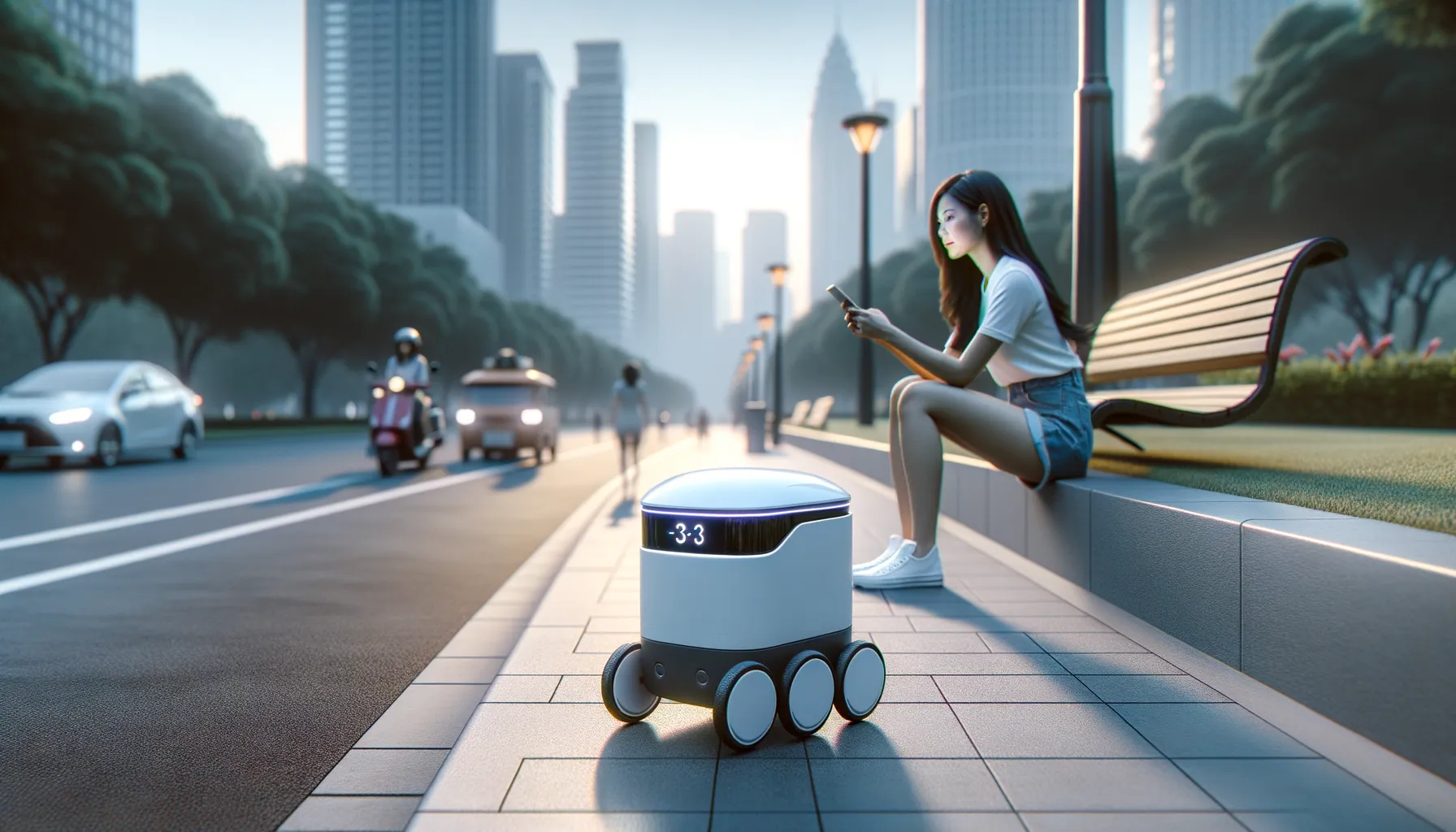
The system is already deployed commercially. Through a partnership with Coco Robotics, it guides approximately 1,000 delivery robots across Los Angeles, Chicago, Jersey City, Miami, and Helsinki.
How 30 Billion Photos Became a Navigation System
GPS signals are notoriously unreliable in cities. Radio signals bounce off tall buildings in what engineers call the "urban canyon" effect, often placing devices on the wrong block entirely. Niantic's VPS solves this by comparing real time camera imagery against its massive dataset of landmarks, buildings, and street features.
The system works because multiple players photographed the same locations across different weather conditions, lighting angles, times of day, and heights. This gave the company enough visual data to build three dimensional models of the physical world. "We had a million plus locations around the world where we can locate you precisely," CTO Brian McClendon said, "with several centimeters of accuracy" and knowledge of "where you're looking."
Data collection accelerated in 2020, when Pokemon Go introduced "Field Research" tasks that rewarded players for scanning real world statues and landmarks with their cameras. Players technically opted in to contribute images, but the gap between "help scan this statue for bonus items" and "your photos will train commercial delivery robot navigation" is vast.
From Pikachu to Pizza Delivery
CEO John Hanke framed the connection bluntly: "It turns out that getting Pikachu to realistically run around and getting Coco's robot to safely and accurately move through the world is actually the same problem."
Coco's robots carry up to eight extra large pizzas or four grocery bags and have completed more than half a million deliveries. GPS based delivery robots on college campuses struggled to cross streets or find doors. By combining four onboard cameras with Niantic's VPS, the machines can navigate precisely—and the delivery robots themselves collect additional data to continuously improve the model.
The Privacy Problems
Several dimensions of this arrangement raise serious questions:
- Data repurposing: Players downloaded a game. Their photographs now train commercial mapping infrastructure for delivery robots. These are entirely different use cases, and "consent to play a game" is a thin foundation for "consent to build commercial AI systems."
- Private spaces: Player submitted images may include apartment buildings, residential courtyards, and other private spaces that were never intended to be mapped at centimeter level precision.
- Law enforcement access: Coco's delivery robots have reportedly provided camera footage to the LAPD. A system that can pinpoint exact locations based on visual landmarks could be attractive to police departments beyond Los Angeles.
- Ownership changes: The data was originally collected by Niantic, which had roots in Google. After Scopely (Saudi owned) acquired Niantic in May 2025, all of that player data transferred to new ownership—a scenario players never could have anticipated when they signed up in 2016.
A Familiar Pattern
This is not the first time everyday interactions were quietly repurposed for AI training. Google's CAPTCHA tests—those "click all the traffic lights" challenges—trained computer vision models while verifying you were human. Social media posts, uploaded photos, and browsing patterns regularly become training data for systems their creators never mentioned to users.
The Pokemon Go case is notable for its scale and specificity. Thirty billion images, contributed by hundreds of millions of players over a decade, built a proprietary mapping system now used for commercial robotics. The players were effectively an unpaid workforce for a spatial AI company that did not exist when they started playing.
Hanke envisions creating "a virtual simulation of the world that changes as the world does." For privacy, the question is whether the people building that simulation ever meaningfully agreed to do so.