Feb 09, 2026 · 5 min read
NYC Subway Testing AI Cameras That Generate Physical Descriptions of Riders
The MTA is piloting artificial intelligence surveillance at fare gates that records video clips and automatically creates descriptions of suspected fare evaders.
How the AI Fare Gates Work
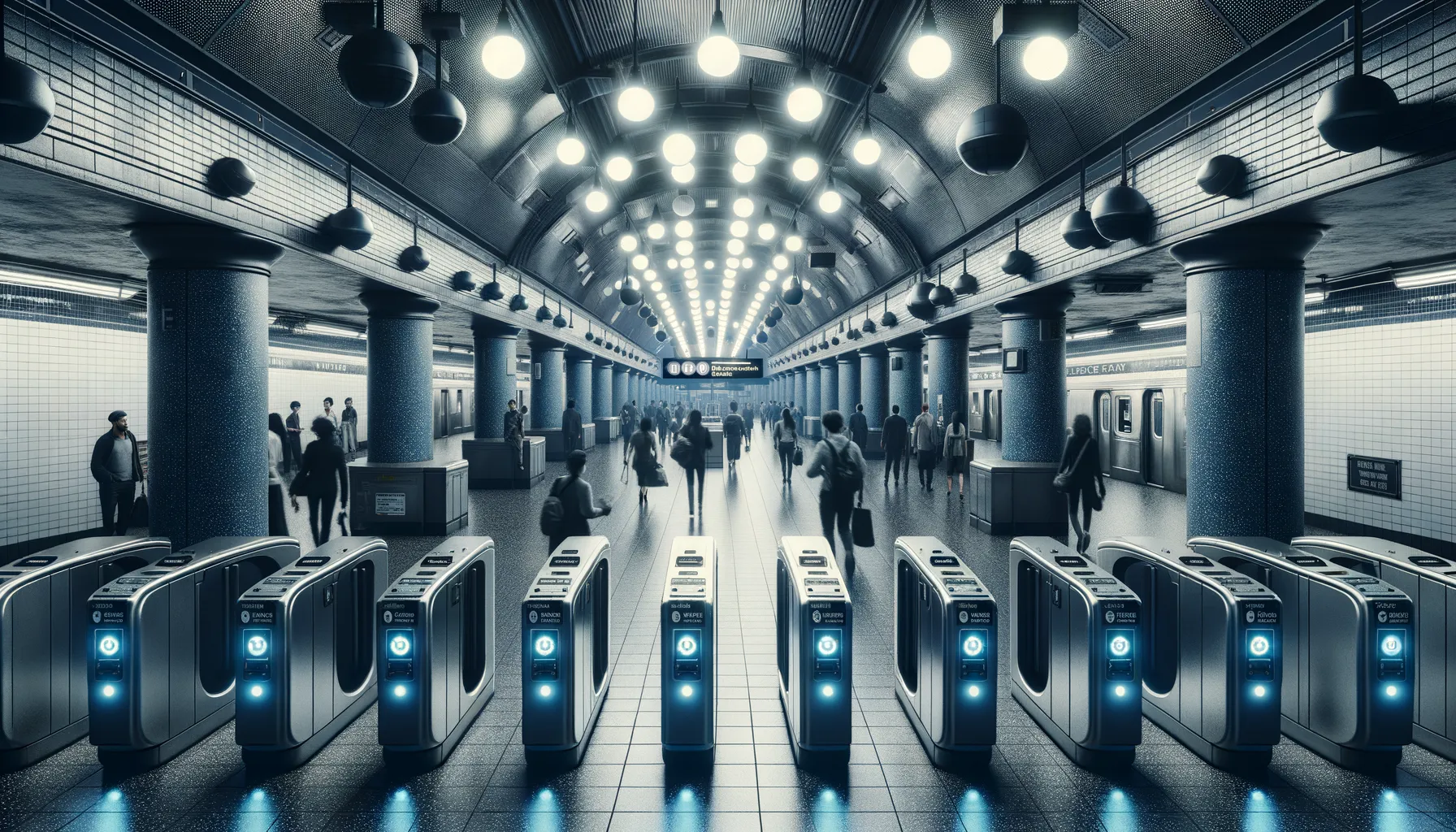
New York City's Metropolitan Transportation Authority is testing AI powered cameras built into subway fare gates. When the system detects someone passing through without payment, it automatically records a five second video clip and uses artificial intelligence to generate a written physical description of the suspected fare evader.
This information is then transmitted directly to the MTA. The technology is manufactured by Cubic, the same company that provides the city's OMNY contactless payment system. The pilot program has been deployed at select stations as the MTA evaluates expanding the technology systemwide.
15,000 Cameras and Growing
The fare gate cameras are just one piece of a broader surveillance expansion. The MTA currently operates more than 15,000 cameras deployed across approximately 472 subway stations. Until now, monitoring these cameras has been manual, reactive, and resource intensive.
In December 2025, the MTA solicited vendor proposals for products using advanced computer vision and artificial intelligence technologies to detect unusual or unsafe behaviors. The RFP suggests the agency wants to automate monitoring across its entire camera network, not just at fare gates.
Proposed capabilities include detecting weapons, monitoring unattended items, and even anticipating subway stampedes before they happen.
Facial Recognition Accuracy Concerns
Civil liberties advocates have raised serious concerns about the accuracy of AI powered identification systems. Research has consistently shown that facial recognition technology performs worse on minority groups, particularly Black individuals. This creates a risk that the fare evasion system could misidentify innocent passengers to law enforcement.
While the MTA says its current system generates physical descriptions rather than using facial recognition for identification, the infrastructure being built could easily be expanded. The same cameras and AI systems that track fare evasion could be repurposed for facial recognition with a software update.
New Yorkers Sleepwalking Into a Surveillance State
Michelle Dahl, executive director of the Surveillance Technology Oversight Project, warned that New Yorkers are generally sleepwalking into this surveillance state. The transit system expansion is part of a citywide trend toward biometric monitoring that has accelerated in recent years.
Major retailers throughout the city now use facial recognition technology, including Wegmans, T Mobile, Madison Square Garden, Walmart, Home Depot, Fairway, and Macy's. By April 2020, the NYPD had spent over five million dollars on facial recognition technology, with at least 100,000 dollars in annual expenditures continuing since then.
The result is a comprehensive surveillance infrastructure that tracks New Yorkers as they shop, commute, and move through public spaces. Each individual system may seem benign in isolation, but together they create detailed records of people's daily movements and activities.
The Broader Privacy Implications
The subway surveillance expansion raises questions that extend beyond fare enforcement. When cameras can automatically identify and describe individuals, generate behavior profiles, and transmit that data to authorities, the line between public safety and mass surveillance becomes difficult to distinguish.
Privacy advocates point out that the data collected today could be used in ways not originally intended. Physical descriptions and behavior patterns recorded for fare evasion could potentially be accessed by law enforcement for unrelated investigations. The five second video clips could be retained and analyzed long after the original incident.
As cities across the United States consider similar technology deployments, New York's implementation will likely serve as a model. The choices made about data retention, access controls, and oversight will have implications far beyond the subway system.
What Riders Should Know
For subway riders concerned about privacy, the options are limited. Unlike online tracking, which can be blocked with browser extensions and VPNs, physical surveillance in public spaces is difficult to avoid. Some considerations:
- The AI cameras are specifically triggered by fare gate events, not general movement
- Using OMNY or a MetroCard as normal should not generate a surveillance record
- The system currently generates descriptions, not confirmed identifications
- Data retention policies and access controls have not been publicly detailed
The MTA has not announced a timeline for expanding the pilot program or releasing details about how the collected data will be stored, secured, and shared with other agencies.