Sep 29, 2026 · 7 min read
BlueMail Read Receipts: Does BlueMail Track Your Email?
BlueMail's read receipts ask permission instead of hiding a pixel, and the app blocks tracking pixels in mail you receive. The privacy question worth asking is a different one: what its servers touch when your phone gets a push notification.
BlueMail, the free cross platform mail app from Blix Inc. of Jersey City, shows up on a lot of Android phones as the replacement for a stock mail client. If someone sent you a message from it, can they see when you opened it? Mostly no. BlueMail read receipts rely on the old standard request that your own mail app can decline, not an invisible tracking image. That is a better answer than several rivals give. It is not the whole privacy story, though, because on mobile BlueMail's servers sit between your provider and your phone.
Key Takeaways
- BlueMail's help center says its read receipts "only work with email services that support them, like Exchange servers," and some clients "require the recipient's consent" before replying.
- BlueMail's read receipt documentation describes a receipt request, not a tracking pixel, so a recipient can refuse it or never see it.
- BlueMail's security page says the app "blocks intrusive tracking pixels by default" in mail its users receive, as part of a suite called Blue Guard.
- Blix's privacy policy says that on mobile its servers process "either the OAuth token or encrypted credentials" and briefly handle "portions of each incoming email message" to send push notifications.
- Apple pulled BlueMail from the Mac App Store in June 2019 over Gatekeeper rules and reinstated it after a revised build was submitted on February 7, 2020.
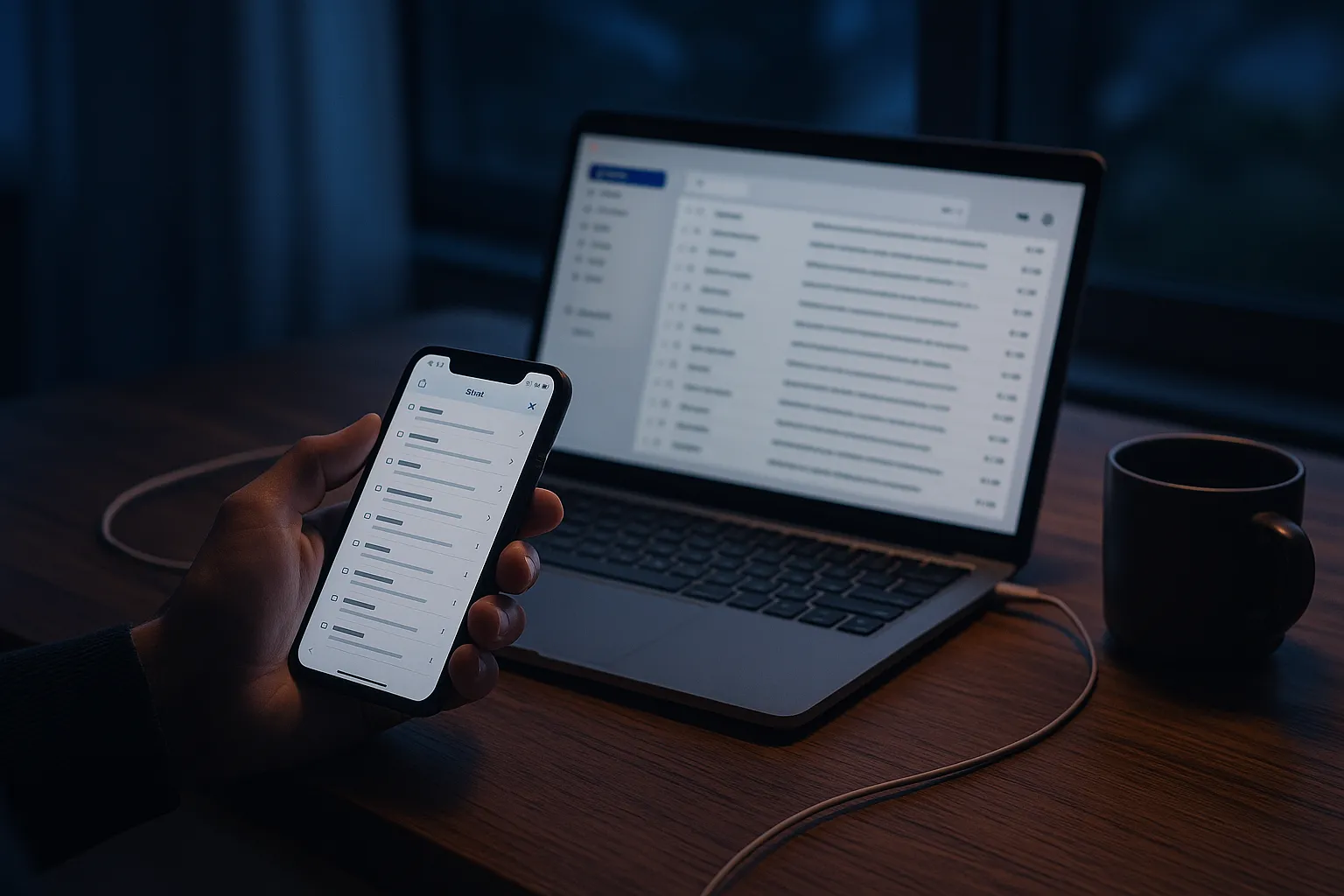
Does BlueMail Track Your Email?
No, BlueMail does not secretly track when you open email sent from it. What it offers is a read receipt request, and the recipient controls the answer. BlueMail's read receipts help page explains that the feature asks the recipient's email system to confirm the open, warns that "some email clients may also require the recipient's consent before sending a read receipt back to BlueMail," and says receipts "only work with email services that support them, like Exchange servers."
That describes the Message Disposition Notification standard, defined by the IETF in RFC 8098. The request travels as a header. Nothing loads, nothing phones home, and the receiving software decides what happens. Gmail on a personal account simply ignores these requests, so a BlueMail user writing to a gmail.com address usually gets nothing back.
BlueMail's help center makes no mention of pixel based open tracking. You can turn receipts on for a single email from the compose menu, or for every message from one account in Settings, where the account settings page now shows "Enable Read Receipt" as a direct toggle.
How Is That Different From Pixel Tracking?
A standard read receipt asks for permission, while a tracking pixel takes the information without asking. That difference is the whole ballgame. Mozilla's Thunderbird read receipts use the same consent based standard and ask before sending anything back.
- Receipt request: a header in the email. Your app may prompt you, send silently, or ignore it. It reveals that you opened the message only if your side agrees.
- Tracking pixel: a tiny remote image unique to you. When your client loads it, the sender's server logs the time and, without a proxy, your IP address and rough location. You never get asked.
Several popular mail apps take the second route. Spark Mail sells open tracking as Read Statuses on paid plans, and most of the email tracker Chrome extensions bolted onto Gmail work the same way. BlueMail, based on its own documentation, does not.
Does BlueMail Block Trackers in Mail You Receive?
Yes, BlueMail says it blocks tracking pixels in incoming mail by default. Its Security Center states: "BlueMail blocks intrusive tracking pixels by default. Marketers and spammers can't see when you open, where you opened from or which device you used." The page bundles this into Blue Guard, which it describes as "phishing detection, attachment quarantine, pixel-tracker blocking and encrypted transport."
We could not test how thorough the blocklist is, and BlueMail does not publish it. Every pixel blocker misses some trackers, especially ones disguised as normal sized images. Treat "by default" as a good baseline, not a guarantee.
What Do BlueMail's Servers See?
On desktop, BlueMail's servers see neither your credentials nor your mail; on a phone with push notifications, they handle both briefly. This is where the "partially" in our verdict comes from.
The BlueMail privacy policy draws the line itself. "If you use Windows, Mac or Linux: We do not process your credentials or OAuth tokens. If you use a mobile device... we will process either the OAuth token or encrypted credentials." For push, "our servers will momentarily process portions of each incoming email message," hand them to the phone's push service "within few seconds," and then the emails "are automatically and completely deleted."
The marketing copy softens this. The Security Center promises "0 Emails stored on our servers" and calls the push path a "thin, message-blind relay." Both can be true about storage while the policy is also true about processing: a server that reads part of a message for a few seconds still reads it. The policy names the processors behind the platform too, including Amazon Web Services, Google, DigitalOcean, OpenAI and Stripe.
Here is the practical implication. A mobile mail app that syncs directly on the device only needs your token on your phone. An app with server side push needs a copy of that token, or your encrypted password, on infrastructure you don't control. If Blix's servers were ever breached, the question is what an attacker could do with those tokens, not whether any mail was stored. Sign in with OAuth rather than an app password where your provider allows it, because you can revoke an OAuth grant from your Google or Microsoft account page in seconds.
Has BlueMail Had Privacy Controversies?
BlueMail's best known fight was with Apple, and it was about app security rules rather than tracking. MacRumors reported on February 11, 2020 that Apple had removed BlueMail from the Mac App Store in June 2019, saying the app was "creating a new binary with a bundle ID that changes on each launch," which Apple said could "override basic data security protections." BlueMail returned after Blix submitted a revised build on February 7, 2020.
In between, Blix sued Apple in October 2019, as AppleInsider covered, claiming "Sign in with Apple" and its Hide My Email feature infringed a Blix patent on anonymous sign in. The two sides told very different stories. Neither story involves BlueMail tracking its users' readers, and we found no report of it doing so.
What This Means for Your Gmail Inbox
If you receive mail from a BlueMail user, you have little to worry about from the app itself. At worst, a receipt request arrives, and Gmail on a personal account won't answer it. The bigger threat sits in everything else in your inbox: newsletters, sales sequences and cold outreach tools that embed pixels from marketing platforms, which BlueMail has no control over.
Here is the irony. BlueMail users get pixel blocking by default, but if you read Gmail in a browser, you don't. Google's image help page says its image proxy stops senders from learning your location, yet a proxied image still registers an open. Our guide to blocking email tracking in Gmail walks through the options, and the Edison Mail review shows how another free mail app with server side processing handled the same tradeoffs.
Quick checklist if you use BlueMail yourself:
- Leave read receipts off unless a workplace Exchange setup expects them.
- Confirm tracker blocking is still on after updates.
- Turn off push on mobile if you don't want Blix's servers touching your mail, and accept slower fetch intervals.
- Review connected apps in your Google Account every few months and revoke BlueMail if you stop using it.
The Verdict
Does BlueMail track your email? No for recipients: its read receipts are the consent based RFC 8098 kind, and it blocks pixels for its own users. Partially for its users: on mobile with push turned on, Blix's servers hold your token or encrypted credentials and briefly read incoming messages. That is a disclosed tradeoff, not hidden surveillance, but it is a real one, and you should make it knowingly.