Jul 06, 2026 · 6 min read
He Emailed ICE's Director. Agents Tracked Him for Months
David Streever, 45, of Rochester, New York, sent one critical email to then acting ICE director Todd Lyons in January 2026. Five months later, Homeland Security Investigations agents showed up at his home, then tracked him to an airport hotel hours after he landed — and DHS still hasn't explained how.
David Streever wrote one angry email in January 2026. Six months later, three federal agents showed up looking for him, one at an airport hotel he had checked into hours earlier, in a city where nobody knew he would be. The 45 year old Rochester, New York resident never posted a threat, never joined a protest caught on camera, never broke a law anyone has named. He sent an email criticizing a government official. Then Homeland Security Investigations found him, twice, raising a question nobody in government has answered: how did they know where he was?
Key Takeaways
- David Streever, 45, of Rochester, New York, emailed then acting ICE director Todd Lyons on January 26, 2026, comparing Lyons to a Nazi official after federal officers fatally shot Renee Good and Alex Pretti during immigration operations in Minneapolis.
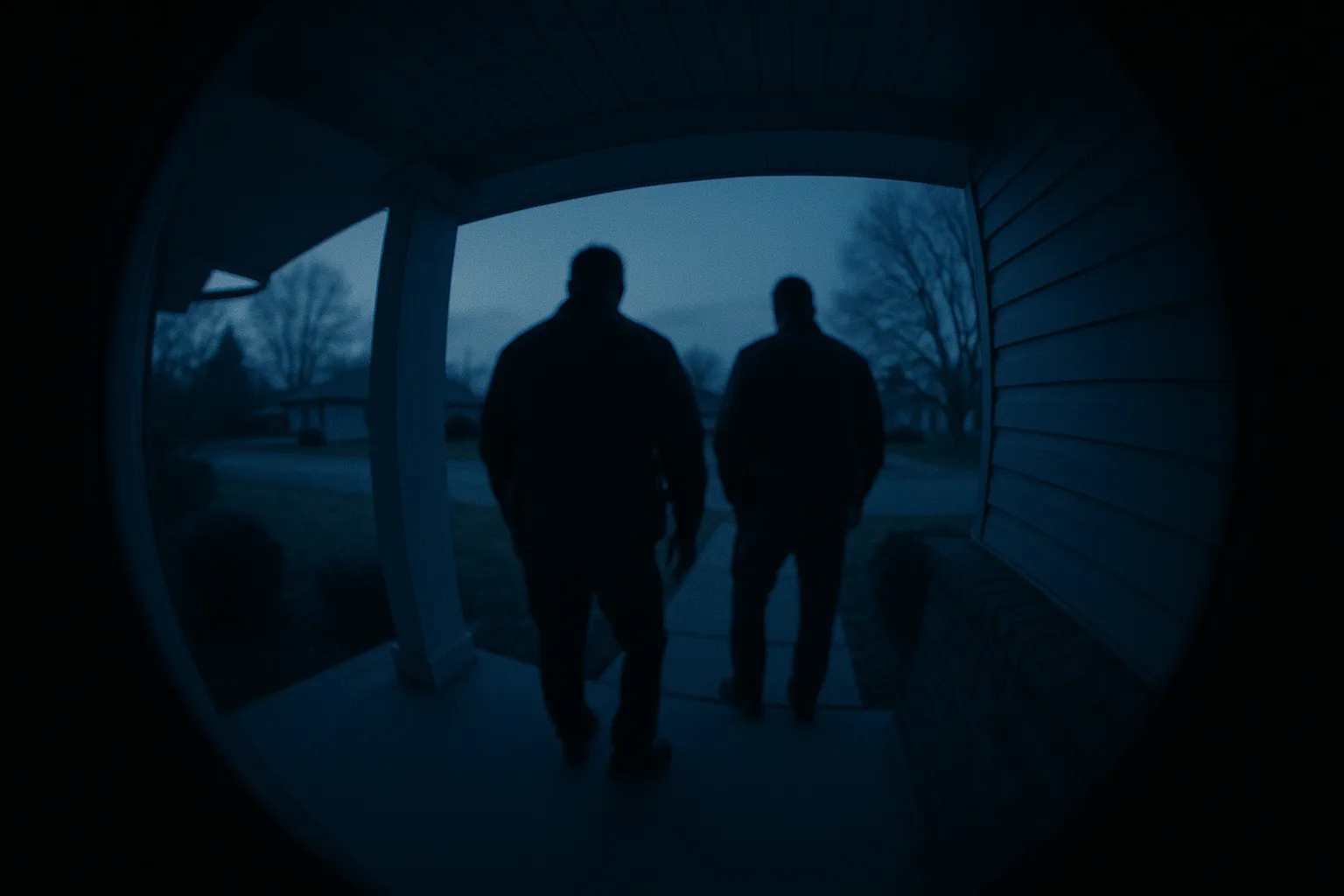
- Homeland Security Investigations agents visited Streever's home about five months later, in late June 2026, while he was vacationing in Finland with his 7 year old daughter, an encounter his doorbell camera recorded.
- A third HSI special agent tracked Streever to an airport hotel near JFK just hours after he landed back in the United States, leaving a business card at the front desk even though Streever says he hadn't told anyone which hotel he had chosen.
- NPR reported the story on July 1, 2026, describing it as part of a broader pattern of Department of Homeland Security actions against protesters and critics of immigration enforcement over the past year.
- Streever says he is "confused and concerned" about how agents located him at that specific hotel, and DHS has not disclosed what investigative methods it used.
What Did Streever's Email Actually Say?
Streever's email, sent January 26, 2026, was a blunt condemnation of Todd Lyons written after two killings shook Minneapolis. Days earlier, federal officers had fatally shot Renee Good and, separately, Alex Pretti, a nurse who witnesses say was pepper sprayed and shot after stepping between an agent and a bystander during an enforcement operation. According to a copy reviewed by NPR, Streever compared Lyons to a Nazi official and predicted his downfall.
It was the kind of email a private citizen sends and forgets: no call to violence, no coordination with anyone else, nothing beyond one person's outrage at a public official over the conduct of the agency he ran. Lyons has since moved on from the acting director role, but the email sat in a file somewhere for months.
What Happened When Agents Showed Up at His Home?
Two HSI agents in blue jackets appeared on Streever's Rochester porch in late June, while he was in Finland with his 7 year old daughter. It was his doorbell camera, not his memory, that captured the visit, as RochesterFirst reported. His wife, home at the time, told the agents she did not know anything about a threatening email. According to Streever, the agents said the visit concerned "an email he may or may not have sent threatening Todd Lyons."
That phrasing is worth pausing on. A blunt, insulting email predicting a political downfall is not a threat, and DHS has not confirmed the January 26 email even triggered the visit. The ambiguity is doing real work: it's the justification for federal agents appearing, unannounced, at a private home over correspondence that reads like protected political speech.
How Did Agents Find Him at the Airport Hotel?
This is the part of the story with no public answer. Streever landed at John F. Kennedy International Airport, checked into a nearby hotel for the night, and within hours a third HSI special agent showed up and left a business card with the front desk. Streever says he had not told the officer who checked his passport where he was staying, and even his wife did not know which hotel he had booked.
Streever called himself "confused and concerned" about how the agent found him that fast, at that specific address. Neither DHS nor HSI has explained the methods involved. What's notable is that it happened at all: a citizen who sent one email six months earlier was locatable, in near real time, at an address he told no one in advance.
Is This Part of a Larger Pattern?
Streever's case is not isolated. NPR frames it as one entry in a growing list of DHS actions against protesters and critics of immigration enforcement over roughly the past year. A separate NPR investigation from June 2026 found the agency sending conflicting signals about maintaining a database on protesters, and a February 2026 report described a federal lawsuit alleging DHS illegally tracked and intimidated observers at enforcement sites. Homeland Security has also used subpoenas to press tech companies for information about accounts and individuals critical of administration officials, part of the same expansion of federal data access that has fueled recent scrutiny of DHS's own information systems.
Civil liberties advocates argue these episodes share a structure: broad investigative authority, an ambiguous threshold for what counts as concerning speech, and a track record of showing up at people's homes or, in Streever's case, a hotel room, without charging anyone with a crime. A federal class action cited in NPR's coverage argues DHS is violating the First Amendment through actions "designed to chill, suppress, and control speech that they do not like." The pattern echoes findings elsewhere in federal law enforcement; a Justice Department watchdog report found the FBI opened assessments on roughly 100 journalists without the required factual basis. Three federal agents' worth of attention paid to one citizen's inbox is a concrete data point, not an outlier.
Why This Should Worry Anyone Who Writes a Critical Email
Most people who fire off an angry message to a government official's inbox assume it disappears into a void, read once by an aide, then forgotten. Streever's experience suggests that assumption no longer holds. One email, sent once, with no follow up and no coordinated campaign behind it, generated a home visit and an airport hotel visit five months later.
That carries a direct chilling effect on the communication journalists, activists, and ordinary citizens rely on to hold officials accountable, the same communication at stake in the Supreme Court's recent ruling on warrantless location tracking. A reporter emailing a press office with pointed questions, or a citizen emailing an agency director after a controversial use of force, depends on the premise that criticism sent through a private channel stays low stakes. When the response to one email is three agents and an unexplained ability to find someone in a hotel he told no one about, that premise breaks down for exactly the people whose purpose depends on saying something uncomfortable to power.
DHS has not detailed what tools led agents to Streever's hotel, and likely will not unless compelled to. That silence is itself consequential: uncertainty about how an agency locates people works as a deterrent independent of whatever method was used, because the person on the receiving end has no way to calibrate their own exposure. Streever wrote one email and now has no way of knowing whether the same attention awaits the next person who does the same thing.
The unresolved question at the center of this story, how did they find him, is not a technical curiosity. It's the entire civil liberties stake of the case. Until DHS answers it, anyone who has sent a sharply worded email to a federal agency is left to wonder whether their own inbox has already been read the same way.