Apr 14, 2026 · 5 min read
The FBI Just Shut Down a $500 Phishing Kit That Stole $20 Million—and Arrested Its Creator
W3LL sold access to corporate email accounts by bypassing MFA in real time. The first joint US-Indonesia enforcement action against phishing infrastructure just took it offline.
What Happened
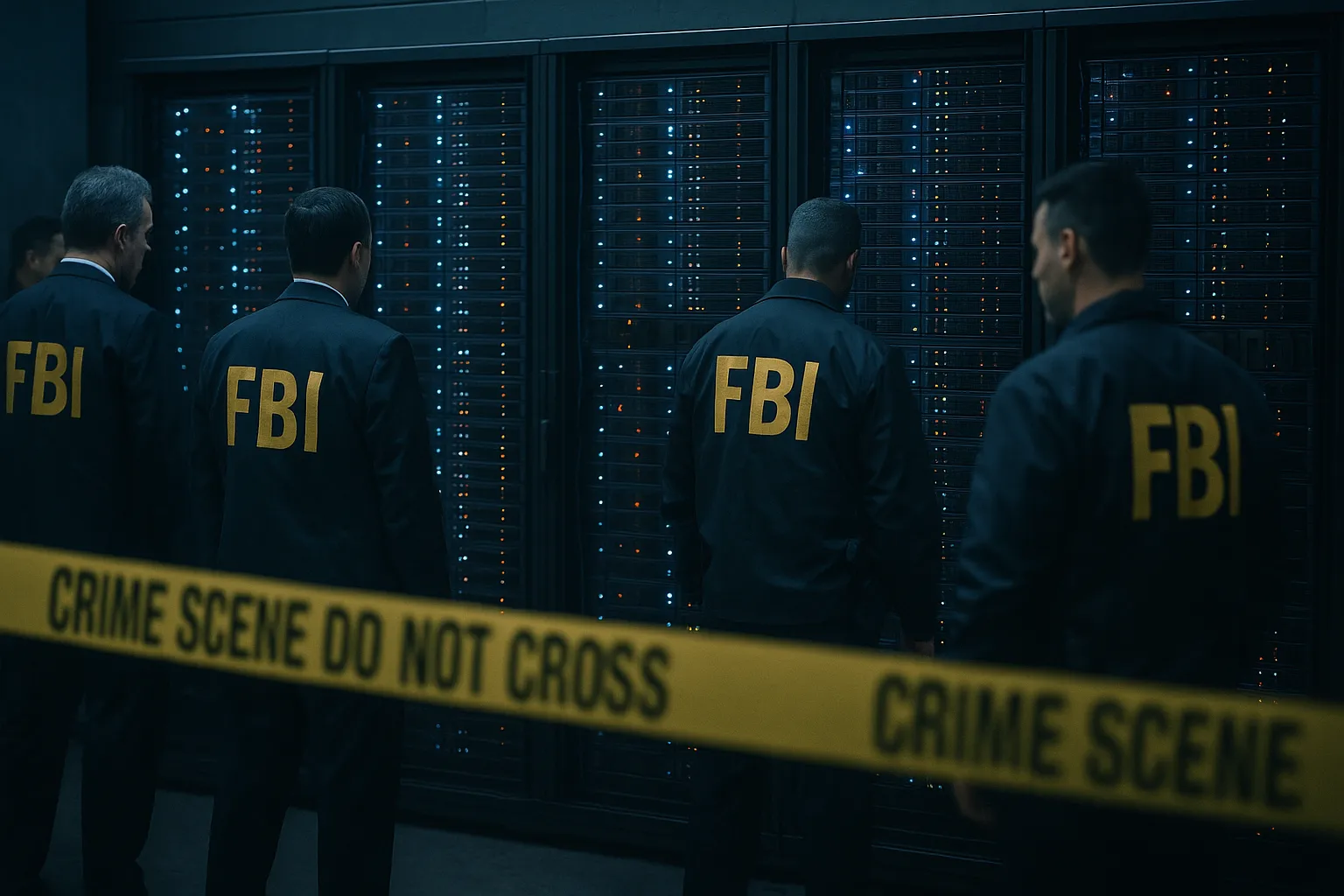
The FBI's Atlanta Field Office and Indonesian authorities dismantled W3LL, a phishing platform that sold turnkey tools for breaking into corporate email accounts. The operation, announced on April 13, 2026, marks the first coordinated enforcement action between the United States and Indonesia targeting a phishing kit developer. Indonesian authorities arrested the platform's alleged developer as part of the joint takedown.
The domain w3ll.store was seized under a court order from the U.S. District Court for the Northern District of Georgia. The accompanying W3LLSTORE marketplace, where stolen credentials and unauthorized network access were bought and sold, was also shut down.
How the Kit Worked
The W3LL phishing kit, priced at just $500, gave buyers everything they needed to steal corporate email credentials and bypass multi factor authentication in real time. The kit worked through adversary in the middle (AiTM) attacks: it created convincing replicas of corporate login portals, then sat between the victim and the real server, intercepting not just passwords but also one time MFA passcodes and session cookies as they were entered.
This meant that even organizations using MFA were not protected. The phishing page would capture the MFA token and immediately replay it against the real login server, giving the attacker a fully authenticated session. Once inside, attackers used the compromised accounts for business email compromise (BEC) schemes, invoice fraud, and payment redirection.
The Scale of the Damage
Over its years of operation, the W3LL ecosystem facilitated significant harm:
- 25,000+ compromised accounts sold through the marketplace between 2019 and 2023
- 17,000+ victims targeted worldwide between 2023 and 2024
- $20 million in fraud attempts facilitated through stolen credentials
The platform's business model was remarkably efficient. For a one time $500 investment, a criminal with no technical skill could launch sophisticated phishing campaigns against corporate targets. The rise of phishing as a service platforms like Venom shows that W3LL was part of a broader trend in commercialized cybercrime infrastructure.
Why MFA Alone Was Not Enough
The W3LL kit exploited a fundamental weakness in how most organizations implement multi factor authentication. Standard MFA, including SMS codes, authenticator app tokens, and email verification, protects against password reuse but not against real time interception. When a phishing page relays your credentials and MFA token to the real server simultaneously, the server has no way to distinguish the legitimate login from the fraudulent one.
The only MFA methods resistant to AiTM attacks are hardware security keys (FIDO2/WebAuthn) and passkeys, which cryptographically bind the authentication to the specific website domain. A phishing page on a different domain cannot trigger the key to respond. Organizations still relying on push notifications, SMS codes, or time based tokens remain vulnerable to the same technique W3LL commercialized.
The Marketplace Survived the Domain Seizure
While the w3ll.store domain has been seized, investigators noted that the marketplace's operations had already migrated to encrypted messaging platforms before the takedown. This means the community of buyers and sellers may continue operating through channels that are harder for law enforcement to monitor and disrupt.
This mirrors a pattern seen across cybercrime infrastructure: when a centralized platform is taken down, the participants scatter to decentralized alternatives. The arrest of the alleged developer removes a key figure, but the phishing techniques and the customer base that W3LL built over years do not disappear with a single domain seizure.
What Organizations Should Do
The W3LL takedown is a reminder that phishing infrastructure is becoming commoditized. Defending against these attacks requires moving beyond traditional MFA:
- Deploy FIDO2 security keys or passkeys. These are the only authentication methods that resist AiTM phishing by design.
- Implement conditional access policies. Require compliant devices and restrict logins from unfamiliar locations or IP ranges.
- Monitor for session token anomalies. If a session token appears from a different IP or device than the one that authenticated, flag it for review.
- Train employees on AiTM phishing. Many awareness programs still focus on spotting obvious fake emails. Modern phishing kits produce login pages that are visually indistinguishable from the real thing. Teach employees to verify URLs, not just visual appearance.
The EvilTokens campaign that hit 340 organizations used a different technique but the same underlying principle: steal the session, not the password. Until organizations treat session tokens with the same care as credentials, phishing as a service will remain profitable.