Jan 21, 2026 · 5 min read
The FBI Says Scammers Can Clone Any Voice in 10 Seconds—Here's How to Tell If That Call Is Real
Voice cloning technology has crossed a dangerous threshold. A few seconds of audio from a voicemail, social media video, or phone call is now enough to create a convincing fake of anyone's voice—including yours.
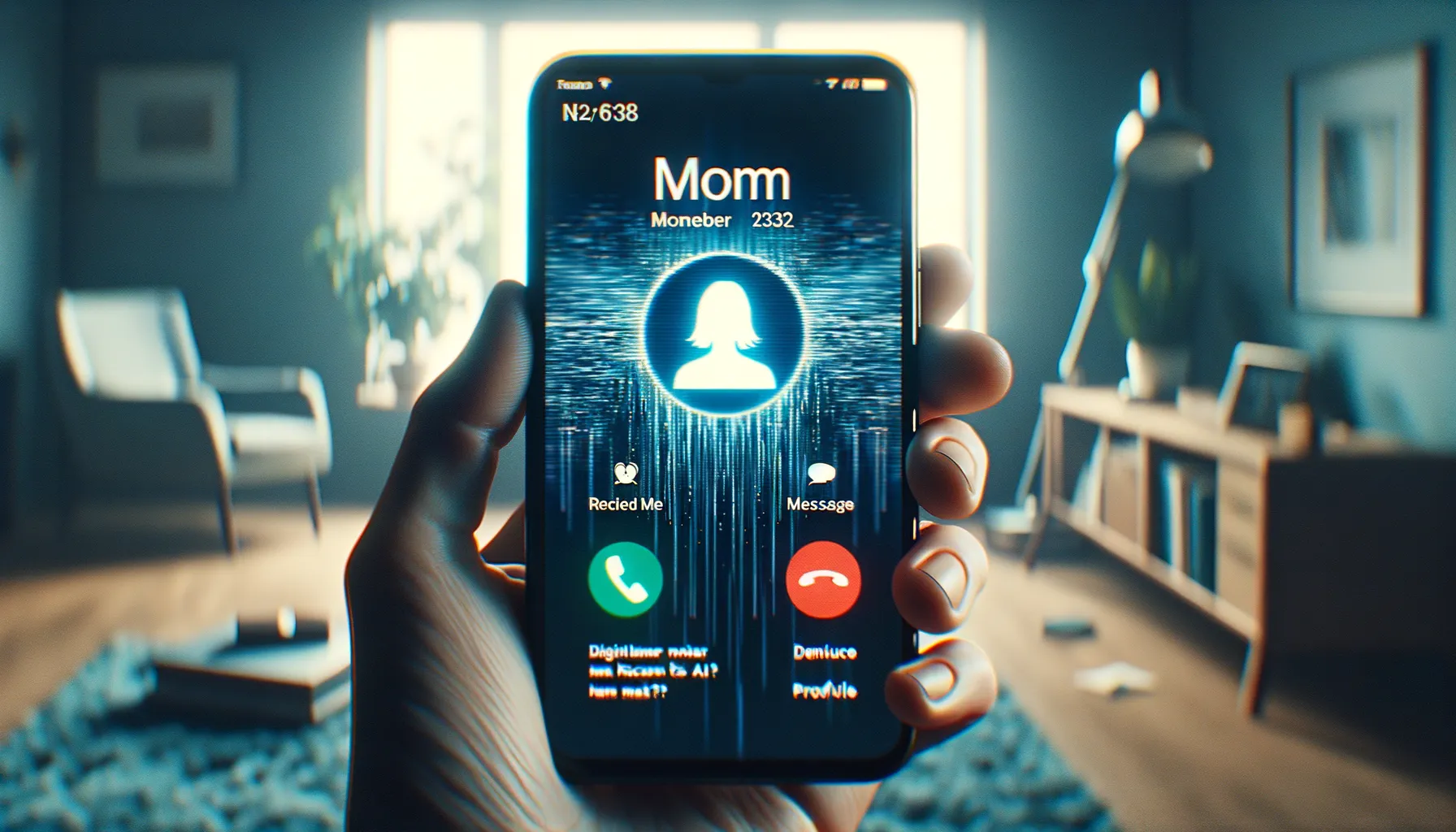
That urgent call from your CEO asking for a wire transfer? It might be an AI. The panicked voicemail from your daughter saying she's been arrested? Possibly synthetic. The government official requesting sensitive information? The FBI has issued multiple warnings that this is exactly what scammers are doing right now.
Voice deepfakes have surged 442% between the first and second half of 2024, according to CrowdStrike. American companies lost over $200 million to deepfake fraud in the first quarter of 2025 alone. And the technology keeps getting cheaper and more accessible—creating a convincing voice clone now costs less than two dollars.
How Voice Cloning Actually Works
Modern voice cloning uses deep neural networks to analyze the unique characteristics of a voice—pitch, tone, rhythm, breathing patterns, and the subtle inflections that make each person sound distinct. The AI breaks speech into tiny units called phonemes and learns to reproduce them in any combination.
Ten years ago, cloning a voice required hours of high quality recordings and significant computing power. Today, consumer grade tools can produce a functional clone from just 10 seconds of audio. Professional systems can achieve near perfect replication with a few minutes of source material.
The voice doesn't need to come from a phone call. Attackers harvest audio from YouTube videos, podcast appearances, earnings calls, social media clips, and voicemail greetings. One executive's TED talk becomes the source material for a $25 million fraud.
The FBI's Warning: Government Officials Are Being Impersonated
Since 2023, the FBI has tracked campaigns where attackers impersonate senior US government officials—White House staff, Cabinet members, and members of Congress. The December 2025 FBI alert describes a consistent pattern:
- Initial contact via text or AI voice message claiming to be from a senior official
- Rapport building to establish trust and create urgency
- Request to move to encrypted messaging like Signal, Telegram, or WhatsApp
- Extraction of authentication codes, sensitive documents, wire transfers, or introductions to other targets
The targets aren't just officials themselves—attackers go after family members and personal contacts, knowing they're more likely to comply with an urgent request that appears to come from someone they trust.
The Multimodal Attack: Email + Voice Working Together
What makes modern deepfake attacks especially dangerous is how they combine multiple channels. A scammer doesn't just send a phishing email or make a fake call—they do both, each reinforcing the other's legitimacy.
The attack typically unfolds like this:
- Step 1: A convincing email arrives requesting urgent action—a wire transfer, credential update, or document sharing
- Step 2: Minutes later, a phone call "confirms" the email request. The voice sounds exactly like your CEO, your IT department, or your bank
- Step 3: Because the call verifies the email, the target complies
In 2024, a Hong Kong corporation lost $25 million when attackers cloned the CFO's voice and sent coordinating emails about an "acquisition payment." The finance team followed standard verification procedures—the email matched the voice call—and transferred the funds to offshore accounts.
The Real Cost: $200 Million and Counting
The financial impact is staggering. According to industry data:
- American companies lost over $200 million to deepfake fraud in Q1 2025
- Business email compromise accounts for 73% of all reported cyber incidents
- The FBI's IC3 recorded $2.7 billion in BEC losses in 2024
- Global losses to AI enabled fraud are projected to reach $40 billion by 2027
- 62% of organizations experienced deepfake attacks in the past year
Some major retailers now report receiving over 1,000 AI generated scam calls per day. The scale is industrial. The FCC recently proposed a $4.5 million fine against a telecom that routed 61,000 fake bank calls through an account that had been dormant since 2018.
How to Verify If a Call Is Real
The FBI and security researchers recommend several verification strategies:
- Establish a family code word. Create a secret phrase that only your real family members would know. If someone calls claiming to be a relative in distress, ask for the code word before taking any action
- Call back on a known number. Never act on information from an unexpected call. Hang up and call the person directly using a phone number you already have—not one provided during the suspicious call
- Require out of band verification for financial requests. Any request involving money or sensitive data should require confirmation through a completely separate channel—a video call, in person meeting, or signed document
- Listen for tells. Current AI voices sometimes have subtle lag, unnatural pauses, or robotic undertones. Though this is becoming less reliable as the technology improves
- Ask unexpected questions. A cloned voice can only say what the attacker has scripted. Ask about something specific that only the real person would know
What Organizations Should Do
For businesses, the implications are significant:
- Implement dual approval for high value transactions. No single phone call or email should authorize large transfers
- Train employees with realistic simulations. Staff need exposure to what deepfake attacks actually sound like
- Deploy voice authentication systems. Some platforms can now detect synthetic speech patterns
- Limit executive voice exposure. Consider the security implications of public speaking, podcasts, and earnings calls
The FBI recommends reporting any suspected AI voice scam to the Internet Crime Complaint Center at ic3.gov.
The Trust Problem
Voice has always been one of our most trusted verification methods. We recognize friends and family by how they sound. We authenticate callers by their voice patterns. Entire industries—banking, customer service, security—rely on voice as a form of identity.
That foundation is crumbling. When anyone's voice can be cloned from a 10 second sample, voice alone can no longer serve as proof of identity. The FBI puts it bluntly in their guidance: "AI generated content has advanced to the point that it is often difficult to identify."
The defense isn't better detection technology—at least not yet. It's process. Verification procedures that don't rely solely on what someone sounds like. Multiple channels of confirmation. A healthy skepticism toward urgent requests, even when they come in a familiar voice.
Because the next call that sounds exactly like someone you trust might not be them at all.