Jun 30, 2026 · 6 min read
DirtyClone CVE-2026-43503: Linux Kernel Root Exploit
JFrog published exploit analysis on June 25 and a public PoC landed June 29. DirtyClone escalates an unprivileged local user to root by corrupting the page cache—without writing a single byte to disk—making it invisible to every hash-on-disk file integrity tool deployed against it.
Key Takeaways
- CVE-2026-43503, named DirtyClone, is a local privilege escalation in the Linux kernel's skbuff networking path that allows an unprivileged user to reach root.
- The root cause is that
__pskb_copy_fclone()drops theSKBFL_SHARED_FRAGsafety flag during packet cloning, bypassing the mitigation that was itself introduced to fix DirtyFrag. - JFrog Security Research reported the bug to Linux kernel maintainers on May 19, 2026; a patch merged into mainline as v7.1-rc5 two days later on May 21.
- Debian and Fedora are affected in their default configurations because both enable unprivileged user namespaces by default; Ubuntu 24.04 and later has partial AppArmor mitigation but remains listed as affected.
- DirtyClone corrupts the in-memory page cache without touching disk, so file integrity monitoring tools that hash on-disk files report no change even after a successful attack.
What Is CVE-2026-43503?
CVE-2026-43503 is a local privilege escalation vulnerability in the Linux kernel's socket buffer (skbuff) networking subsystem. An unprivileged local user triggers the bug by manipulating cloned network packets in a way that corrupts the kernel's page cache—the in-memory store of file pages that the kernel maintains to avoid disk reads. Once the page cache is corrupted, the attacker can modify files that a privileged process subsequently reads, supplying malicious data that runs as root.
The specific function is __pskb_copy_fclone(), which clones socket buffers when the kernel needs to forward or retransmit a packet. During that cloning operation, the function fails to copy the SKBFL_SHARED_FRAG flag from the original buffer to the clone. That flag is the gate that prevents shared fragment data from being modified after it has been handed off. Without it, the cloned packet's fragment pages can be overwritten by the unprivileged caller, and because those pages may be the same physical pages used by the page cache, the corruption carries forward into the file system's view of those files.
JFrog Security Research reported the vulnerability to the Linux kernel security team on May 19, 2026. A patch was merged into mainline as part of v7.1-rc5 on May 21, just two days later. JFrog published the full exploit analysis on June 25, and a public proof of concept appeared on June 29, though JFrog withheld the fully weaponized version.
Why Does DirtyClone Bypass Existing Mitigations?
DirtyClone is a direct descendant of DirtyFrag (and its relatives Fragesia), the earlier class of Linux page cache exploits that researchers and AI scanning tools surfaced in May 2026. The DirtyFrag family targets the same page cache abstraction through different code paths in the skbuff subsystem. The Linux kernel maintainers mitigated DirtyFrag in part by introducing SKBFL_SHARED_FRAG—a flag that marks fragment pages as shared and therefore off limits for post-handoff modification.
DirtyClone bypasses that fix because __pskb_copy_fclone() was never updated to propagate the flag. The original packet carries the protection. The clone does not. From the kernel's perspective, the clone looks like a fresh, unshared buffer. The safety check that the DirtyFrag mitigation added never fires on the clone. The attack proceeds through the clone rather than the original, and the page cache corruption happens exactly as it would have before the mitigation existed.
This is the third time in 2026 that a targeted mitigation in the skbuff path has been bypassed through a sibling code path that was not updated. The pattern is a structural one: the kernel's networking subsystem is large enough that fixing one entry point does not automatically harden all callers that share underlying data structures. Each sibling function needs to be audited individually, and that audit takes time.
Why Is DirtyClone Stealthy?
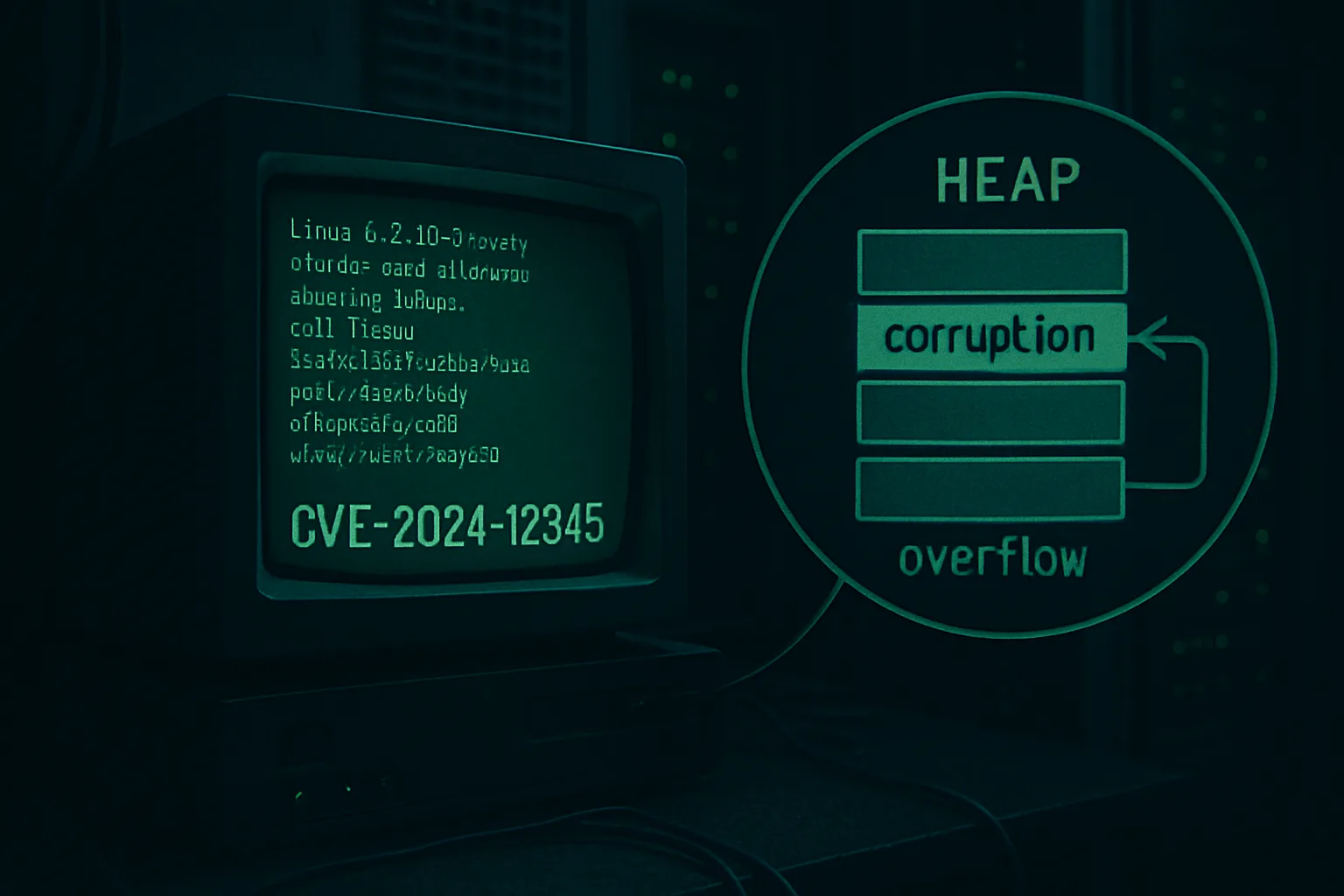
The most operationally significant aspect of DirtyClone is not the privilege escalation itself—it is the fact that the entire attack happens in memory. The kernel's page cache is a RAM-resident copy of file content. When DirtyClone corrupts a page cache entry, the kernel's view of a file changes. A privileged process that reads that file gets the attacker's version. The actual bytes stored on disk are untouched throughout.
File integrity monitoring tools—Tripwire, AIDE, and the hash comparison features built into most endpoint detection and response platforms—work by computing a hash of the file's bytes on disk and comparing against a known good baseline. Because DirtyClone never writes to disk, those hashes never change. A monitoring tool that runs immediately after a successful DirtyClone attack reports every file as clean. The on-disk binary is identical to what it was before the attack. The in-memory version that the kernel is executing is not.
Kernel audit logs do not record the corruption either. The attack path goes through the networking subsystem, not through file system calls. There is no open(), no write(), no mmap() on the target file for auditd to record. Standard system logs show nothing. The first observable signal in most environments is the privileged process behaving differently—which may take minutes, hours, or longer to surface depending on when that process next reads the affected pages.
The implication is that a detection strategy that relies solely on disk state comparison has a blind spot for this entire class of page cache attacks. DirtyFrag, Fragesia, and now DirtyClone all share it. The gap has been documented by security researchers since at least 2024, but DirtyClone is the first publicly exploitable bug in this family to come with a working public PoC while also being demonstrably invisible to the dominant FIM deployment pattern.
Which Systems Are Vulnerable?
JFrog confirmed exploitation on Debian and Fedora in their default configurations. Both distributions enable unprivileged user namespaces by default, which is the prerequisite for triggering the skbuff cloning path as an unprivileged user. Without user namespace access, the attacker cannot reach the vulnerable code path.
Ubuntu 24.04 and later ships with AppArmor restrictions that limit unprivileged user namespace creation. Ubuntu's security team confirmed the partial mitigation reduces the attack surface but does not eliminate it—the distribution is still listed as affected and requires a kernel update. Red Hat Enterprise Linux and its derivatives (AlmaLinux, Rocky Linux) restrict unprivileged user namespaces by default, which provides meaningful protection even on unpatched kernels, though patching remains the correct resolution.
Container environments deserve separate consideration. The default Docker seccomp profile does block several of the syscalls used in the exploit chain. Custom profiles, --privileged containers, and Kubernetes pods without a seccomp policy may not have those restrictions in place. Any container that shares the host kernel on an unpatched Debian or Fedora host should be treated as potentially exposed.
How to Check and Patch
The target version is kernel v7.1-rc5 or any stable backport that includes the __pskb_copy_fclone() flag propagation fix. Check your current kernel with uname -r. Consult your distribution's security advisory to identify the exact patched package version for your release.
- Debian:
apt update && apt upgrade, then reboot. Check the Debian Security Tracker entry for CVE-2026-43503 to confirm the patched package version for your release. - Fedora:
dnf update kernel, then reboot. - Ubuntu:
apt update && apt upgrade, then reboot. The AppArmor restriction on unprivileged user namespaces reduces but does not eliminate risk until the kernel is updated. - RHEL and derivatives:
yum update kernelordnf update kernel, then reboot.
If an immediate reboot is not possible, a temporary mitigation on Debian and Fedora is to disable unprivileged user namespaces: sysctl -w kernel.unprivileged_userns_clone=0 (Debian) or sysctl -w user.max_user_namespaces=0 (Fedora). This will break applications that rely on user namespaces—notably some container runtimes, Chrome, and Firefox when run as a non-root user—so it is a stopgap, not a long-term configuration. No in-the-wild exploitation has been confirmed as of June 30, 2026, but the public PoC raises that risk materially.
What This Means for Defenders Beyond Patching
DirtyClone does not change the recommendation to patch—it underscores it. But the FIM blind spot it exposes is worth addressing independently. Hash-on-disk integrity monitoring was never designed to detect in-memory page cache manipulation, and the Linux kernel page cache attack surface is wider than DirtyClone alone. Fragesia, Copy Fail, and DirtyFrag all share the same detection gap. The pattern of AI-assisted discovery surfacing multiple LPEs in the same code family within weeks makes it reasonable to assume more variants are coming.
Complementary detection approaches that are not blind to in-memory corruption include eBPF-based kernel runtime security tools such as Falco and Tetragon, which instrument kernel function calls rather than inspect on-disk state. A rule that fires on unexpected __pskb_copy_fclone() invocations from unprivileged processes would catch DirtyClone specifically. More broadly, any anomaly in privileged process behavior—a setuid binary executing unexpected child processes, making unexpected network connections, or opening unexpected files—is more likely to surface a successful in-memory attack than a disk hash check will.
The overlap with CVE-2026-46333, the ptrace race condition that Qualys disclosed in May with four working exploits, is instructive. That bug also bypasses standard audit logging, also affects default Debian and Ubuntu, and also required behavior-based detection to catch post-exploitation. The Linux kernel is producing a run of serious local privilege escalation bugs in 2026 that share a common operational signature: quiet, log-free, invisible to the tools that most security teams rely on. The defensive adjustment is to build detection that looks at runtime behavior rather than static state.