Jan 23, 2026 · 5 min read
This Police Department Just Got a Military Drone That Can See Your Face From Miles Away
The Baton Rouge Police Department is the first in the nation to deploy a Lockheed Martin surveillance drone designed for war zones.
The Baton Rouge Police Department just became the first local law enforcement agency in the United States to deploy a military grade surveillance drone originally designed for overseas combat operations. The $1 million Stalker VXE30, built by Lockheed Martin and Edge Autonomy, can fly for hours, cover dozens of miles, and according to the police chief, identify faces from miles away.
What This Drone Can Do
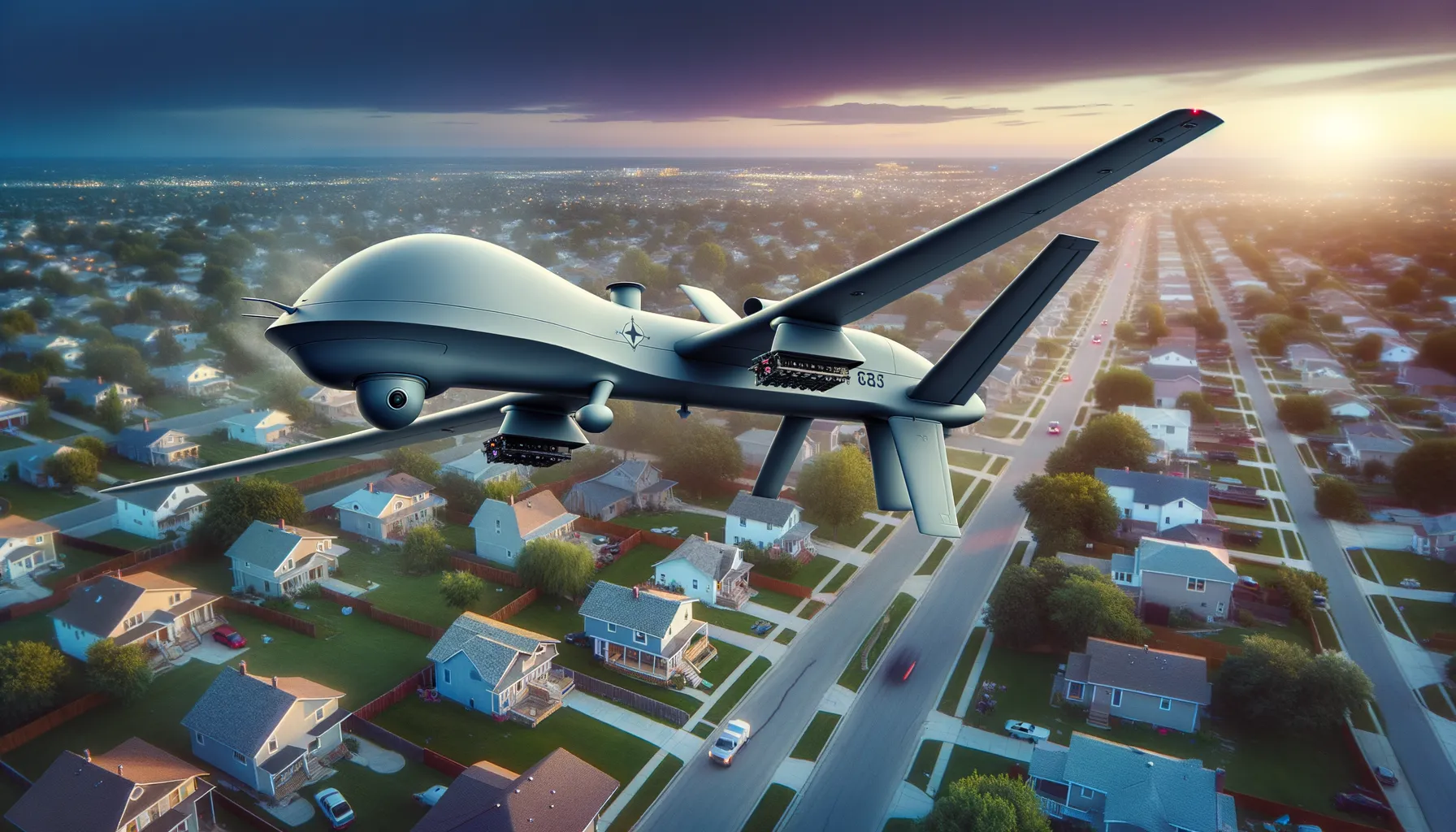
The Stalker VXE30 is not your typical police quadcopter. With a 16 foot wingspan and vertical takeoff capability, it is designed for long endurance missions and wide area surveillance. The drone features a thermal camera with powerful zoom capabilities and can stay airborne for up to four hours at a time.
Police Chief TJ Morse was blunt about its capabilities: "It can be miles away, but we can still have a camera looking at your face, so we can use it for surveillance operations."
The department claims to be the first local police agency in the country to operate this technology. Previously, only federal agencies like the Secret Service had access to similar equipment.
From War Zones to Your Backyard
The Stalker platform has a history of military deployment. Lockheed Martin developed it for intelligence, surveillance, and reconnaissance missions in combat theaters. Now that same technology will patrol the skies above Louisiana neighborhoods.
The acquisition came after a 2023 helicopter crash killed two BRPD officers during a police pursuit. Rather than replace the traditional helicopter, the department transitioned to unmanned aerial vehicles, eventually securing the $1 million package that includes the drone, training, and batteries.
Why Privacy Advocates Are Alarmed
The Electronic Frontier Foundation has filed a public records request to learn more about the acquisition and what oversight policies exist. Their concerns are substantial:
- Drones can access and view spaces otherwise off limits to law enforcement, including backyards and decks
- Footage may be stored and shared beyond the initial flight
- The platform can accommodate additional surveillance equipment like automated license plate readers and facial recognition
- No clear community oversight policies restrict how the drone can be used
The EFF characterizes this acquisition as a "dangerous escalation in the militarization of local law enforcement."
The Broader Surveillance Trend
Baton Rouge is not operating in isolation. Louisiana recently became the first state to authorize law enforcement to intercept and disable drones under a new law signed by Governor Jeff Landry. Meanwhile, drone as first responder programs are expanding across the country, with police departments racing to deploy unmanned surveillance platforms.
The difference here is capability. Most police drones are small quadcopters with limited range and flight time. The Stalker VXE30 operates on an entirely different scale, with the range and endurance to conduct persistent surveillance over wide areas.
What This Means for You
If you live in Baton Rouge, a military grade drone may soon be watching your neighborhood. But even if you do not, this acquisition sets a precedent. Other departments will likely follow, and the technology will only become more capable.
The same principle that applies to email tracking applies here: surveillance expands to fill the technology available. Once the capability exists, the temptation to use it grows. And unlike email, you cannot install an extension to block a drone flying overhead.
What you can do is pay attention. Know what surveillance technology your local police department operates. Support organizations like the EFF that investigate these acquisitions. And remember that privacy, whether in your inbox or your backyard, requires active defense.